Free Weights
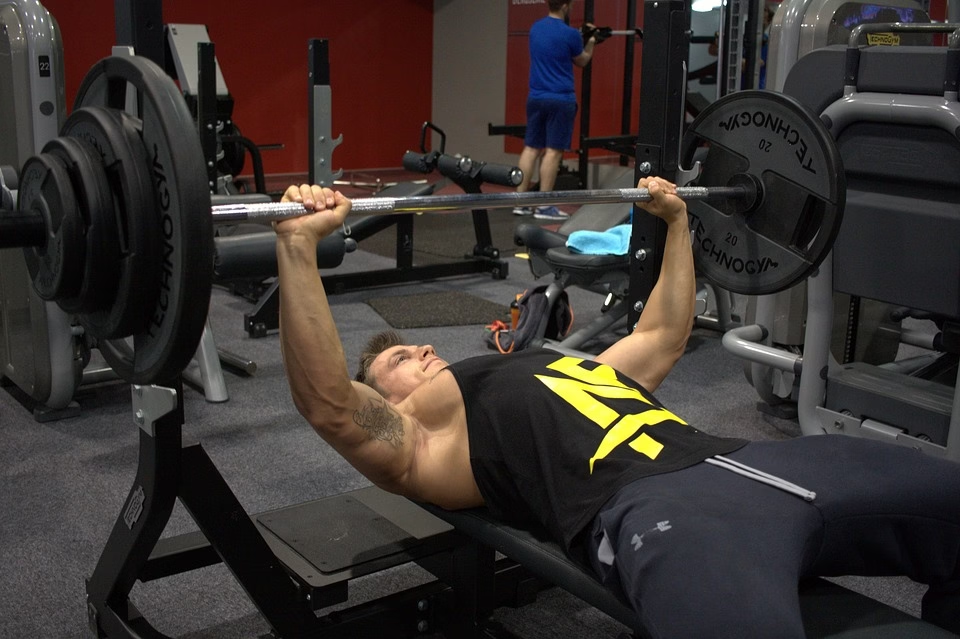
Free weights refer to dumbbells, barbells, kettlebells and any other movable weights that provide resistance without being attached to a machine.
Unlike resistance machines with selectorised weight stacks, free weights allow full freedom of movement, engaging your body in a more dynamic and functional way.
The free weights section of your gym is where you’ll eventually want to spend most of your training time, as these weights give a more efficient workout. Because your body must work harder to balance a moving barbell or dumbbell, every lift using free weights recruits more than just your primary target muscle groups.
Free weight movements force your smaller, deep stabilising muscles to work too, leading to superior overall muscle balance, coordination and power.
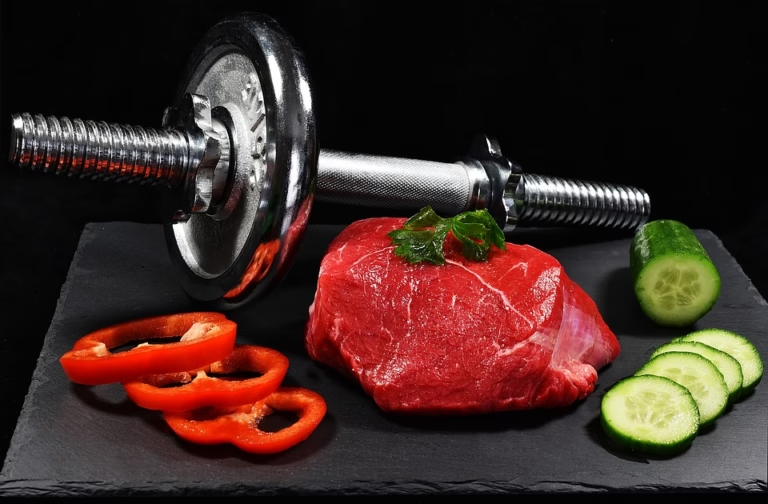
Header image: Pixabay
Strength Training in its Purest Form
Free weights represent strength training in its purest form, offering fast, measurable gains in both muscle hypertrophy and skeletal strength. They also offer unmatched versatility. You can replicate virtually any machine-based exercise using free weights, often with enhanced benefits.
For example, while the leg press targets your quadriceps, glutes, and hamstrings, it does so in a seated and fully supported position.
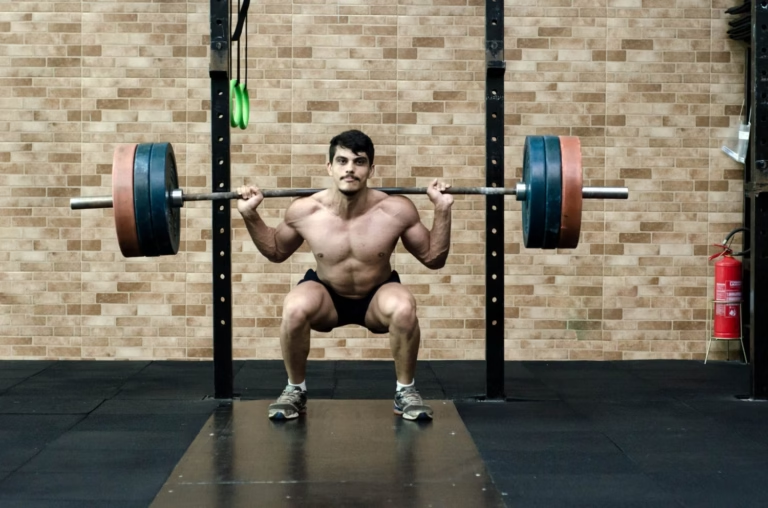
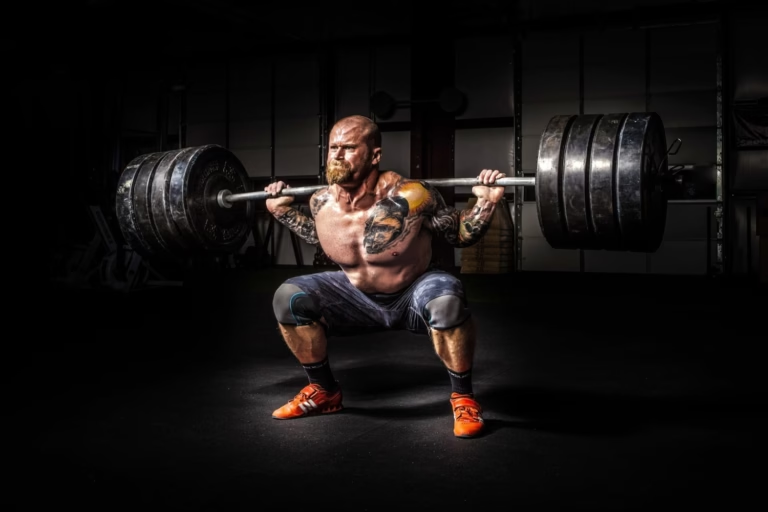
In contrast, the standard barbell back squat engages not only these large muscle groups but also demands full-body engagement. To balance the load and maintain proper posture throughout the movement, your core, lower back, upper traps and shoulders must all work simultaneously alongside your legs.

Barbell Back Squat. Image sourced via Pixabay
Free Weights vs. Weight Machines: Which is Better?
Both free weights and machines serve their roles in a well-rounded training programme. However, free weights are considered superior for overall functional strength and athletic development.
This is because free weights force your body to engage multiple muscle groups simultaneously.
Gym machines support your body and provide a tracking path for the weight, removing the demands of coordination and balance. This means you will be able to lift much more using a machine than you would if performing the same exercise with a dumbbell or barbell. The machine takes the stabilising effort away.
Real-life movement patterns rarely occur in a single, locked-in trajectory. Relying purely on fixed tracks in this way misses out on true functional conditioning.
Free weights require the lifter to stabilise and control the weight through the entire range of motion, mirroring real-life movement patterns.
This results in a more comprehensive, effective workout that builds real strength, directly translating to sport performance and everyday health.
You can combine free weights and bodyweight movements in place of all the weight machines in the gym to achieve the same, or better, results.

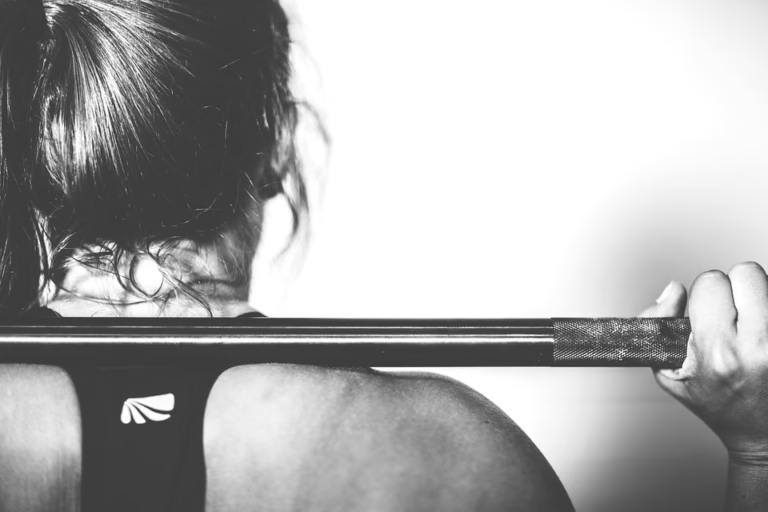
Bicep Curls. Image sourced via Pexels
The Importance of Good Form
If you’re new to weightlifting, it’s a good idea to begin with machines or lighter free weights to develop good form and technique. Mastering proper movement patterns before progressing to heavier loads is important for safety and effectiveness.
Free weights should become a progression point in your routine as you grow more experienced and confident. However, because they place greater demands on your muscles, connective tissues and joints, executing lifts with poor form could lead to injury.
Good form is always much more important than the load of the weight lifted, both for developing muscle and improving your weightlifting technique.
It’s much better to perform a perfect squat with an empty barbell than a messy, half-depth rep with plates you can’t control.
Additionally, learning how to brace your core, maintain a neutral spine and properly control the eccentric (lowering) phase of each lift are key skills to perfect for effective training.
Rules for Free Weight Beginners
- Prioritise compound movements: Focus on multi-joint exercises like squats, deadlifts, barbell bench presses and bent-over rows. These lifts work multiple muscle groups at once, giving you the biggest return on your time investment.
- Master the basics first: Spend time perfecting your movements with light weights or an empty bar before adding plates.
- Use a mirror or film yourself: Set up your phone to record yourself or use a mirror to check your posture, depth and tracking path to catch technical mistakes early.
- Seek professional guidance: If possible, work with a personal trainer to ensure you’re bracing, lifting and re-racking safely and effectively, especially when starting out.
- Progress gradually. Avoid the temptation to lift too heavy, too soon. Your connective tissues (tendons and ligaments) need more time to adapt to heavy loads than your muscle fibres.
- Don’t neglect mobility and flexibility. Strong muscles need the support of flexible, stable joints to hit deep ranges of motion, function optimally and avoid injury. Ensure you perform a dynamic warm up before your workout, and follow up with a targeted cool down after your weights session.
Elevate Your Training
Free weights are powerful tools for anyone serious about building strength. Whether your goal is increased muscle mass, improved sporting performance or simply building a strong, athletic physique, free weights are the best tools in the gym.
With a disciplined focus on good technique and a progressive approach, free weights have the potential to completely transform your physical development.
Pick Your Progression
Find Your Focus: If you ever find your gym motivation slipping, revisiting the underlying physiological benefits of why we lift weights can help to re-anchor your consistency
Check Your Ego: When ego takes over, form breaks down and injury risk skyrockets. Learn how to identify the subtle warning signs that show if you are lifting too heavy during your compound sets.
Chase the Maximum: If your main goal is moving the absolute maximum amount of weight possible on the squat, bench press and deadlift, you can explore the specialised programming rules used in powerlifting.
💬 Share Your Thoughts on Free Weights
Transitioning out of the machine circuit and into the free-weight room is a massive milestone for any lifter. We want to hear about your experiences with the iron:
- Have you successfully made the switch from machines to free weights, and what immediate changes did you notice in your strength?
- What is your favourite free-weight compound exercise, and what challenges did you face when first learning it?
- Have you ever worked with a personal trainer or filmed your sets to fix hidden form mistakes?
- What’s the best piece of advice you’ve received about lifting free weights?
Leave a Reply