Weight Machines
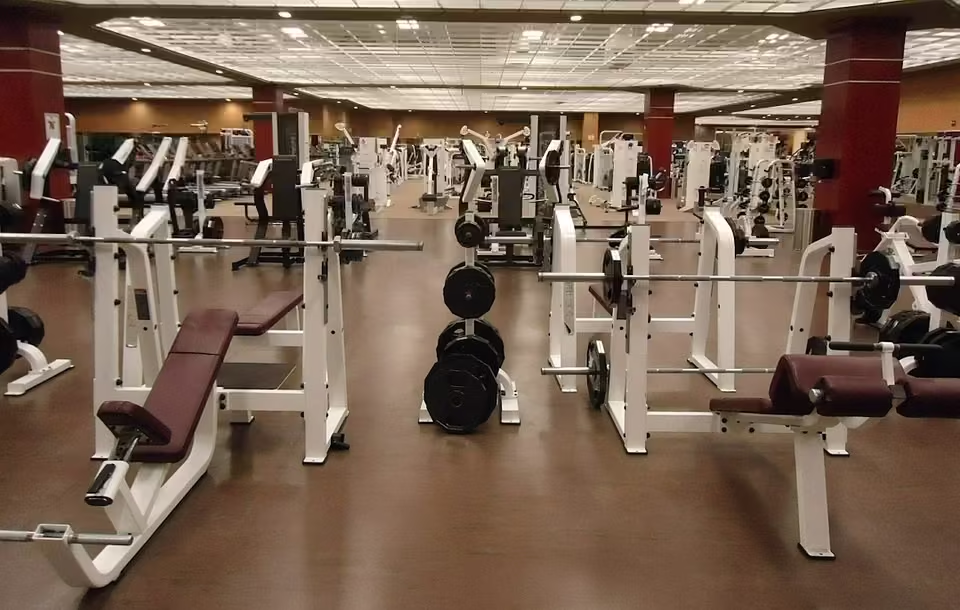
Weight machines in the gym are often grouped by the major muscle groups they target, such as the chest, back, legs, core and arms. Some are designed for compound movements that work several muscles at once, while others are isolation machines that allow you to focus on a single muscle group with precision and control.
Machines are ideal for beginners, those recovering from injury or lifters working on technique or hypertrophy (muscle growth). They offer guided movement, which reduces the demand for balance and stabilisation, letting you concentrate purely on working the target muscle.
While weightlifting machines don’t activate the same range of muscles as free weights, they’re incredibly effective for building strength and improving muscle endurance when used correctly.
Header image: Pixabay
Weight Machines for Upper Body
Training your upper body on guided tracks allows you to completely bypass the fear of losing control over a heavy barbell or dropping a dumbbell.
The machine manages the tracking pathway, so you can safely strip away the demands of balancing heavy weights. This mechanical advantage means you can push your muscles to failure, fix stubborn muscular imbalances and safely maximise your training without needing a spotter.
Chest Press
The chest press mimics the bench press but offers back support and fixed movement. This makes it easier to push heavy without risking form.
Targets: Chest, shoulders and arms (pectoralis major, anterior deltoids, triceps brachii)
Free Weight Equivalent: Barbell or dumbbell bench press, press ups
Coaching Tip: Focus on using a full range of motion and avoid locking elbows at the top of the lift to reduce stress on the joint.
Pec Dec
The pec dec is an isolation movement for the chest, perfect for driving hypertrophy in the pectorals. The seated position reduces lower back strain.
Targets: Chest and front of shoulders (pectoralis major, anterior deltoids)
Free Weight Equivalent: Flat dumbbell chest flies, press ups
Coaching Tip: There is some controversy around the pec dec regarding injury risk. Because the pads can force the arms too far back at the start, your shoulders are placed in a vulnerable position. Take care to use proper control and a lower, manageable weight with this isolation exercise.
Lat Pulldown
The lat pulldown is an excellent vertical pull movement for building upper back width and strength, especially if bodyweight pull-ups are too challenging.
Targets: Back, shoulders and arms (latissimus dorsi, traps, rhomboids, posterior deltoids, biceps brachii)
Free Weight Equivalent: Barbell rows, dumbbell rows, pull ups, chin ups
Coaching Tip: Try to avoid leaning back excessively during the pulldown. Pulling the weight down strongly with momentum shifts the tension away from the lats and places unnecessary strain on your lumbar spine, which can strain the lower back.
Assisted Pull-Up Machine
The assisted pull-up machine helps build the strength and confidence to progress to unassisted pull-ups. The adjustable counterbalance reduces your effective bodyweight.
Targets: Back, shoulders and arms (latissimus dorsi, traps, rhomboids, posterior deltoids, biceps brachii)
Free Weight Equivalent: Pull-ups or chin-ups using attached weights or bodyweight alone
Coaching Tip: Make sure you still engage your back muscles and avoid letting the machine do all the work. If you’re using too much assistance, you might be neglecting the primary muscles involved.
Seated Row
The seated row encourages good posture and back engagement through a guided rowing motion.
Targets: Back, back of shoulders and arms (latissimus dorsi, rhomboids, middle/lower trapezius, posterior deltoids, biceps brachii)
Free Weight Equivalent: Single-arm dumbbell rows, bent-over barbell rows, resistance band seated rows
Coaching Tip: Keep a straight spine and a braced core during the exercise. This ensures the tension stays on your back muscles and off your lower spine.
Shoulder Press
The shoulder press machine focuses on building shoulder mass and pressing power, while keeping your back fully supported.
Targets: Shoulders, back and arms (anterior and lateral deltoids, trapezius, triceps brachii)
Free Weight Equivalent: Dumbbell or barbell overhead press (military press)
Coaching Tip: If your shoulders have limited mobility or you feel discomfort, reduce the weight and focus on controlled movement.
Bicep Curl
The bicep curl machine keeps the upper arm fixed and isolates the biceps for focused hypertrophy. This isolation lift is also great for mind-muscle connection.
Targets: Front upper arm (biceps brachii)
Free Weight Equivalent: Dumbbell or barbell bicep curls
Coaching Tip: Keep elbows stationery on the pad and don’t shift forward or backward during the lift. This maximises isolation of the biceps and prevents unnecessary strain on the shoulder joint.
Triceps Extension
The triceps extension machine offers a stable way to target the back of the upper arms, with reduced strain on the elbows. It’s great for targeting the triceps without stressing the shoulders.
Targets: Upper back arm (triceps brachii)
Free Weight Equivalent: Overhead triceps extensions, ‘skull crushers’, cable pushdowns
Coaching Tip: Use a slow and controlled motion and avoid yanking the weight with your triceps, which can lead to less muscle engagement and possible strain. Keep elbows tucked in throughout the movement.

Tricep Extension Machine. Image sourced via Pexels
Weight Machines for Legs
Training the lower body with machines provides a massive mechanical advantage: it allows you to load your legs without placing heavy, compressive stress on your spine.
Standard compound free-weight movements require immense technical balance, but these leg tools allow you to isolate the quadriceps, hamstrings and glutes completely. They are the ultimate asset for building massive lower-body power and keeping your joints healthy.
Leg Press
The leg press offers heavy lower-body training with excellent back support, minimising pressure on the spine and allowing safe heavy lifting.
Targets: Legs and buttocks (quadriceps, hamstrings, glutes)
Free Weight Equivalent: Barbell back squats, front squats, goblet squats, bodyweight squats
Coaching Tip: Keep your feet flat with a wide stance on the platform with knees tracking in line with toes. Don’t let your knees cave inwards (known as valgus collapse). These steps will reduce the risk of knee injuries.
Leg Extension
The leg extension machine isolates the quads completely and is often used for pre-exhausting the thighs or rehabilitation. The adjustable pads keep the movement controlled.
Targets: Front of thighs (quadriceps – rectus femoris, vastus lateralis, vastus medialis, vastus intermedius)
Free Weight Equivalent: Forward lunges, sissy squats (named after Sisyphus from Greek mythology who was cursed to push a boulder up a hill forever!)
Coaching Tip: Ensure you don’t lock your knees at the top of the movement, as this can cause stress on the patellar tendon and knee joint. Control the weight on the way down, rather than letting the machine drop.
Leg Curl
The leg curl machine provides isolated knee flexion, which is important for hamstring development and knee health.
Targets: Back of thighs (hamstrings – biceps femoris, semitendinosus, semimembranosus)
Free Weight Equivalent: Romanian deadlifts (RDLs) or Nordic muscle curls
Coaching Tip: Ensure your hips remain firmly against the seat pad throughout the exercise to prevent unnecessary lower back strain. If your hips rise up as you curl, your lower back is arching to cheat the weight, taking the tension off your hamstrings.
Calf Raise
The calf raise machine provides direct lower-leg stimulation with a full range of motion, letting you load the lift with greater resistance than using bodyweight alone.
Targets: Calves (soleus and gastrocnemius)
Free Weight Equivalent: Standing calf raises with dumbbells, seated calf raises with dumbbells
Coaching Tip: Avoid bouncing at the bottom of the movement, which relies on Achilles tendon momentum. Keep each repetition slow and controlled. Pause for a full second at the top contraction.
Glute Machine
The glute machine (or glute kickback machine) isolates the rear hip extensors by using a supportive chest pad and a guided lever arm. This lets you load your buttocks with heavy resistance without putting pressure on your spine.
Targets: Glutes (gluteus maximus, medius, and minimus) and hamstrings
Free Weight Equivalent: Barbell hip thrusts, cable glute kickbacks, bodyweight glute kickbacks
Coaching Tip: Avoid arching your lower back or swinging your torso forward to force the weight up. Keep your hips pressed into the front pad and sweep your leg backward using only your glute muscles.
Seated Adductor and Adbuctor
The seated adductor and abductor machine strengthen the thigh structure, important for lower-body balance, pelvic stability and helping knee joint alignment issues.
Adductor:
Targets: Inner thigh (adductor magnus, adductor longus, adductor brevis, gracilis)
Free Weight Equivalent: Sumo squats, side lunges
Coaching Tip: Adjust the machine to ensure the pads are positioned to offer a comfortable stretch, but not too wide. If he pads are too high or low, it can place stress on your hips and knees. Always warm up your hips before using this machine, as the adductor muscles are prone to strains if trained cold.
Abductor:
Targets: Outer thigh and buttocks (gluteus medius, gluteus minimus, tensor fasciae latae)
Free weight equivalent: Banded lateral walks, Bulgarian split squats
Coaching Tip: Don’t overload the weight stack in hopes of faster gains. Using excessive resistance can force the hip flexors and lower back to twist and cheat the movement. Use a comfortable weight and focus on controlled form.
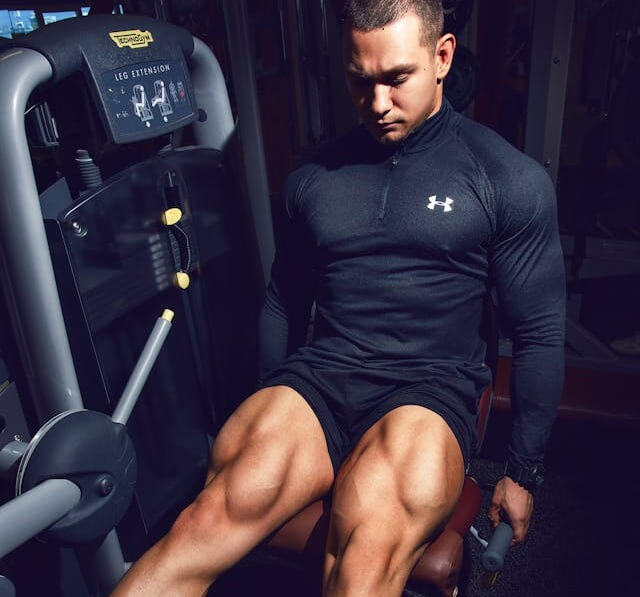
Leg Extension Machine. Imaged sourced via Pexels
Weight Machines for Core
While standard bodyweight planks and crunches are great for beginners and simple home workouts, building a resilient mid-section requires progressive resistance.
Machine training allows you to apply measurable, adjustable weight loads directly to your abdominals and lower back. Strengthening these areas improves your lifting posture, builds core endurance and provides powerful protection against gym-related lower back injuries.
Back Extension Machine
The back extension machine strengthens the lower back in a supported and controlled motion. This exercise is useful for rehabilitation and strengthening your entire back line.
Targets: Lower back (erector spinae)
Free Weight Equivalent: Barbell good mornings, back hyperextensions, floor dorsal raises
Coaching Tip: Avoid hyperextending your spine at the top of the movement. Stop once your torso makes a perfect straight line with your upper body. Leaning too far back places compressive stress on the lumbar spine.
Ab Curl Machine
The ab curl machine provides focused resistance for abdominal crunches, helping build deep structural core power.
Targets: Abdominals (rectus abdominis, obliques)
Free Weight Equivalent: Weighted crunches, hanging leg raises, sit ups
Coaching Tip: Keep a steady tension in your abs by initiating the curl with your torso, using your abdominal muscles to pull your ribs down towards your pelvis. Don’t allow your arms to pull on the handles to start the movement or your neck to crane forward. This reduces strain on your neck and shoulders.
Multi-Purpose & Hybrid Gym Machines
While most weight machines are engineered to isolate a single muscle group, certain pieces of commercial gym equipment feature adjustable, multi-purpose designs. These hybrid machines allow you to execute a massive variety of compound and isolation movements across your entire body.
The Smith Machine
The Smith machine consists of a barbell tracked vertically inside steel runner rails, providing a built-in safety balancing system for heavy multi-joint movements.
Targets: Full Body (primary variations target the quadriceps, glutes, pectorals and deltoids).
Free Weight Equivalent: Barbell back squats, barbell bench presses, barbell overhead presses.
Coaching Tip: Because the bar moves on a fixed vertical path, it completely eliminates the need to stabilise the weight sideways. This is excellent for overloading a specific muscle safely. Ensure you align your joints perfectly with the bar track before you un-rack the load to avoid stress on your knees and shoulders.
The Cable Crossover / Dual Adjustable Pulley
The cable crossover machine features two independent, height-adjustable weight stacks connected to rotating pulleys, offering constant tension throughout an exercise’s entire range of motion.
Targets: Full Body (primary variations isolate the pectorals, deltoids, latissimus dorsi, biceps and triceps).
Free Weight Equivalent: Dumbbell chest flyes, standing arm curls, lateral raises
Coaching Tip: Unlike standard selectorised plate machines that lose resistance at the top or bottom of a lift, cables provide uninterrupted tension against the muscles. Focus on a slow, deliberate negative (eccentric) phase on every rep.
Weight Machines: A Valuable Tool for Strength Training
Weight machines are highly beneficial for beginners, lifters recovering from injury or anyone looking for a structured approach to muscle hypertrophy.
They provide exceptional structural stability, target muscle with high precision and allow you to safely isolate specific muscle groups to failure without needing a spotter.
However, machines shouldn’t be relied upon exclusively. Transitioning to free weights and compound movements over time is essential for building true functional strength, engaging deep stabilising muscles and improving overall balance and coordination.
By combining the muscle-isolating power of gym machines with the structural demands of free weights, you can build a balanced, progressive strength training programme that delivers sustainable, long-term results.
Pick Your Progression
Own Your Stability: Ready to look beyond guided gym equipment? Discover how training with barbells and dumbbells forces your body to build raw structural balance in our Free Weights Guide.
Stay Safe: Protect your joints and navigate the gym floor with confidence by studying our Injury Prevention & Safety Guide.
Smash the Ceiling: Stuck at the same weight for weeks? Learn how to break through stagnant lifts and spark new growth in our guide to Overcoming Strength Training Plateaus.
💬 Over to You!
Weight machines are a great asset for building muscle safely and everyone has their personal favourites. Let us know how you use them in the comments:
- Which are your favourite gym machines? Do you have any machines you dislike and never use?
- Do you prefer using machines at the very beginning of your workout, or as a high-volume finisher at the end?
- Do you have any tips for perfecting your form on specific machines?
- How do you balance machine exercises with heavy free-weight compound movements?

Leave a Reply