Standing Calf Raise
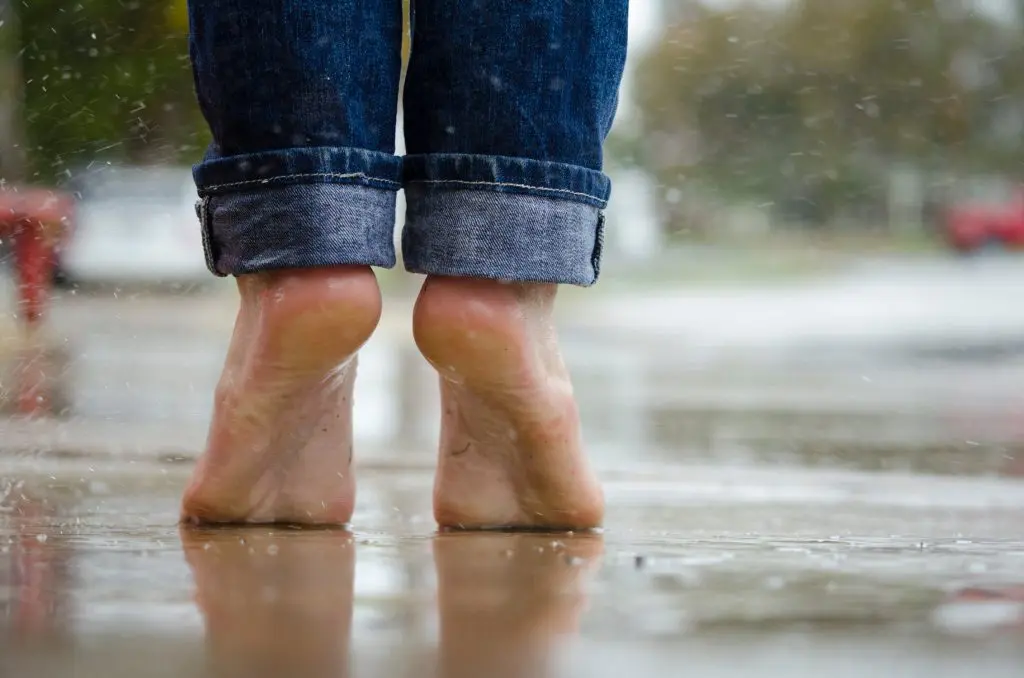
Calf raises are isolation exercises for the calves, which are your lower back leg. The Standing Calf Raise is a foundational bodyweight isolation movement designed to build functional agility, balance, and lean muscle mass without the need for specialised gym gear
The standing calf raise is performed by raising yourself onto your tip-toes slowly and lowering back down again.
The seated calf raise is performed by using your calf muscle to push a bar down until your feet are at full extension then slowly raise back up.
It is also possible to perform a seated calf raise using a gym machine.
Which Muscles Does the Calf Raise Use?
The calf uses the gastrocmemius and the soleus muscles. The gastrocmemius runs along with outside back of the calf, while the solues lies beneath this muscle and runs all the way to the Achilles tendon.
When your point your toes, you are at full plantar flexion. When you pull your heel back, you are at full dorsi flexion (extension).
The calves are used by your body to pull the heel upwards and point the toes down (plantar flexion) and to bring the toes up and heel back (dorsi flexion). This enables walking and running.
The calves are also needed to perform movements that involve the knees, hips and ankles. This means you need your calves to be in good shape in order to perform good squats, lunges, deadlifts and other gym exercises.
By performing calf raises you are strengthening the muscles that support your whole ankle joint. This is because when you raise your heels, this joint becomes destabilised, forcing a strong challenge on all the areas of the lower leg.
There are a number of types of calf raise exercise which can be split into two main forms: standing and seated calf raises.
Standing calf raises put more stress on the gastrocnemius muscle, while seated calf raises put more stress on the soleus. This is why it is advantageous to perform both types of calf raise for maximum benefit from the calf raise exercise.
Plantar and Dorsi Flexion
The natural motion of plantar and dorsi flexion when walking can give some pain if you are on your feet for a prolonged period of time in footwear that does not provide adequate support.
Wearing high heels can put particular stress on the calf as it remains in a permanent plantar flexed position, even throughout the walking motion. This can cause damage over a prolonged period of time.
If a high heel wearer starts wearing flat shoes, they might even feel pain in the shins from the new dorsi flexion motion that they are not used to.
If wearing heels, you should try to extend the foot when at rest to give it a break from the plantar flexed position and extend the calf muscle naturally.
Calf raises are a great exercise for people who wear high heels regularly as they strengthen the calf muscles, giving the lower leg extra support.
The Anywhere, Anytime Exercise
One of the single greatest advantages of the standing calf raise is its sheer accessibility. Because it requires absolutely zero equipment or gym space, it is an excellent, easy exercise that you can perform literally anywhere and at any time.
Whether you’re waiting for a kettle to boil, standing at a desk or brushing your teeth, you can seamlessly integrate a set into your day.
This unmatched convenience also makes standing calf raises a popular, quick habit to practice immediately after eating a meal. Lightweight movement after eating is a great way to gently activate your lower body muscles and help redirect glucose out of the bloodstream to support balanced, stable energy levels.
Furthermore, every time you perform a calf raise, you are actively firing your calf muscle pump. Often referred to by trainers and clinicians as your body’s “second heart,” keeping these lower leg muscles strong helps squeeze the deep veins in your legs, pushing deoxygenated blood back up toward your chest against gravity to optimise your daily cardiovascular circulation.
To learn more about the fascinating metabolic science behind post-meal movement, read our deep-dive guide on How Post-Meal Calf Raises Help Lower and Balance Blood Sugar.
Mind-Muscle Connection
Because the gastrocnemius is a dual-headed muscle (featuring an inner medial head and an outer lateral head), you can subtly adjust your foot alignment to alter the muscular tension:
- Toes Pointed Slightly Inward: Rotating your toes inward by just a few degrees places a greater mechanical emphasis on the outer (lateral) head of the calf, helping to build outer curvature.
- Toes Pointed Slightly Outward: Flaring your toes slightly outward shifts the primary emphasis to the inner (medial) head, which creates inner calf thickness.
Keep these adjustments subtle. Drastically twisting your feet out or in can place unnatural twisting forces on your knee joints. A slight 10-degree turn is all it takes to trigger a completely different muscle stimulus.
How to Perform the Standing Calf Raise
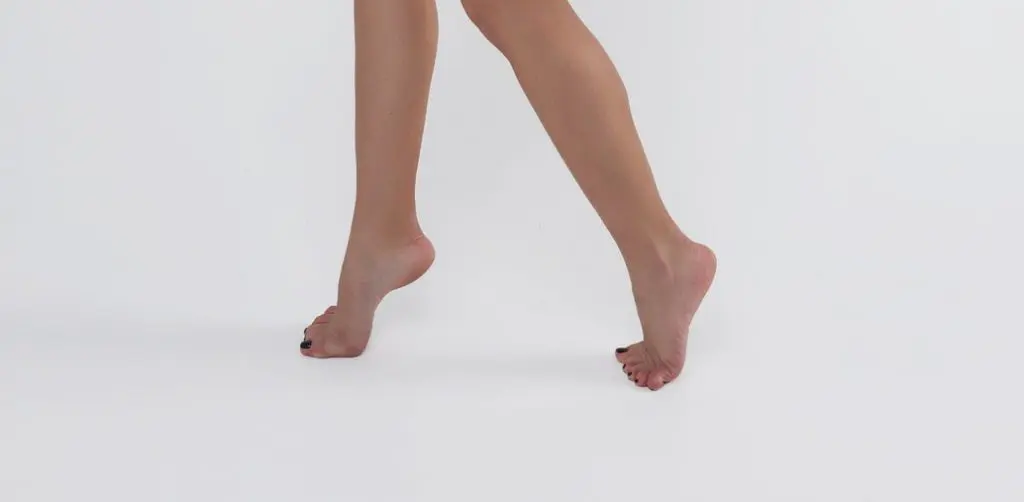
To perform a standing calf raise, position your feet about a hip-width apart. Slowly raise your heels so you are standing on tip-toes. Then slowly lower your heels back down to the ground again. Keep your abs engaged and spine straight. Knees should be slightly bent.
It is important to keep the movement slow and controlled at all times. Never bounce while doing the calf raise as this will increase risk of injury and your muscles will not achieve the full benefit from the exercise.
A slow and controlled motion that uses the full range of the movement will give you the best gains for your calves.
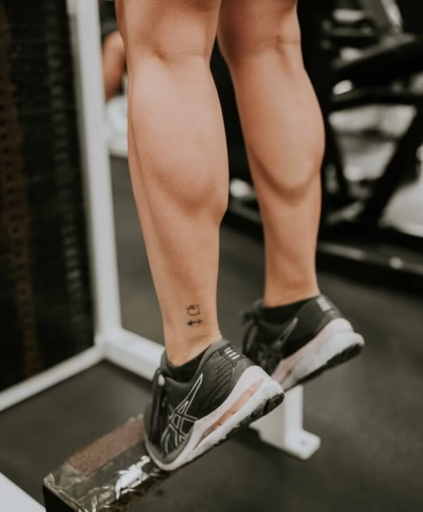
You can carry dumbbells in each hand to make the exercise harder or lower and raise your heels down off a step for an alternative movement to challenge the calf.
The standing calf raise mostly works the gastrocnemius muscle to give a defined shape to the calf.
Common Mistakes to Avoid
To ensure your calf muscles are doing 100% of the lifting mechanics, watch out for these frequent bodyweight form errors:
- Ankle Rolling (Supination): Many people accidentally let their ankles flare outward at the peak of the movement, pushing their weight onto their pinky toes. This strains the outer ankle ligaments. Focus on driving straight up through the base of your big toe.
- Bending at the Hips: If you find yourself leaning your torso forward or sticking your butt out to complete a rep, you are using momentum from your hips to cheat the lift. Keep your body in a perfectly straight line from head to heel.
- Rushing the Negative Phase: Dropping like a rock after reaching the top cuts your muscle tension in half. Take at least two to three full seconds to lower your body back down to maximise muscle growth.
How to Programme the Standing Calf Raise
Because your calves support your total bodyweight every single day, they are packed with fatigue-resistant muscle fibers. To force them to grow and strengthen using just your bodyweight, you need higher volume and intense metabolic stress:
- For General Fitness & Stability: Aim for 3 sets of 15 to 20 repetitions, holding the peak contraction at the top for a full two seconds on every rep.
- For Muscular Hypertrophy (Growth): Perform 4 sets of 25 to 30 repetitions. If you can easily complete 30 reps with perfect form, it is time to progress to the single-leg variation or introduce dumbbells.
Try incorporating bodyweight calf training 2 to 3 times per week at the very end of your lower-body workouts for optimal recovery and development.
The standing calf raise is also an ease exercise to do
Next Step: Looking for heavier progression? If you have access to a commercial gym, try the Calf Raise Machine to overload the muscles with weight stacks.
Expand Your Home Workouts: If you’re building a zero-equipment routine that you can perform anywhere, check out our full collection of Functional Bodyweight Exercises.
Protect Your Joints: To ensure your ankles and knees stay resilient against heavy training strains, explore our guide to Injury Prevention and Safety.
Leave a Reply