Last Updated on November 5, 2026
Have you heard the idea that your calves are your “second heart”? These special muscles are given this status due to their importance in blood circulation, mobility and heart function.
Most people think about strong legs in terms of quads, hamstrings and glutes. But your calves do some of the most important work in your entire body. Hence the moniker!
Instead of thinking about aesthetics and definition in the lower leg, consider circulation, heart health, mobility and long-term strength. This is where your calves come in. They support your entire body from the ground up.
If you want better strength, movement and energy, calf exercises deserve more attention.
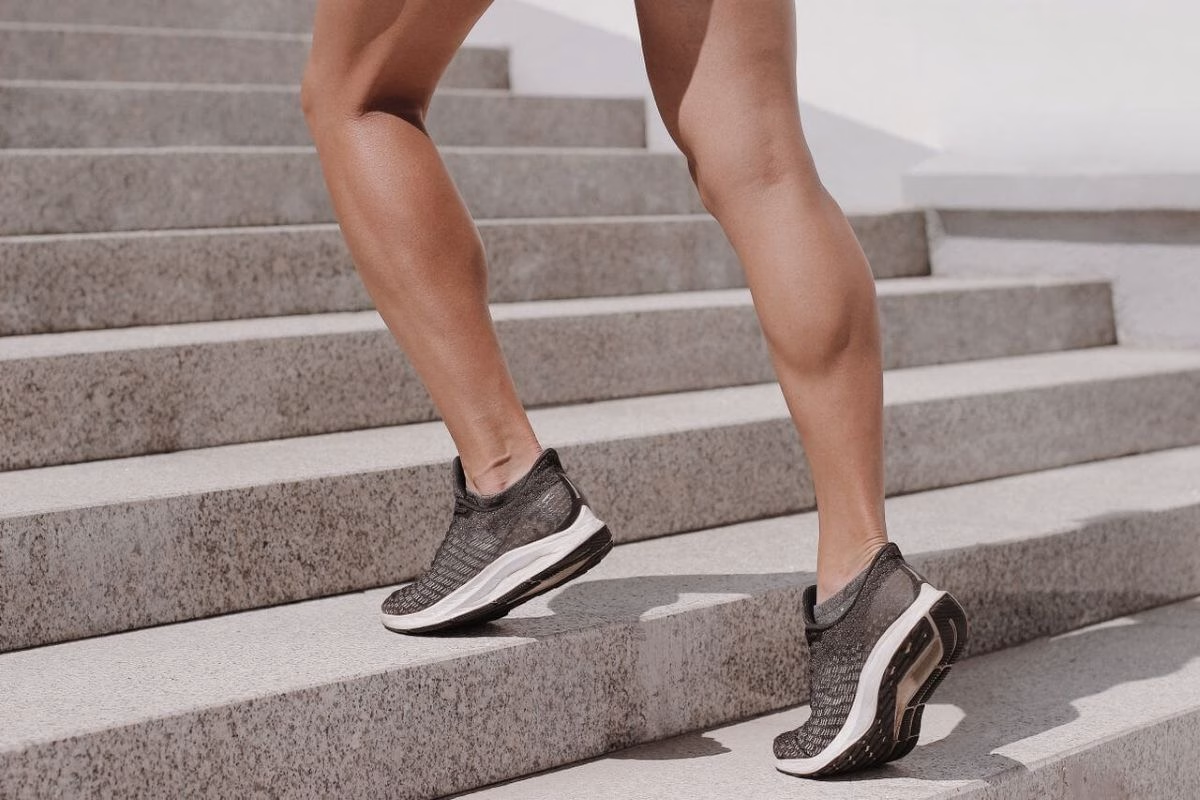
Header image: Pexels
Why are calves called the second heart?
Your calf muscles (gastrocnemius and soleus) play a major role in the “calf muscle pump”. When you walk, push up onto your tiptoes or flex your ankles, these muscles contract and squeeze the veins in your lower legs. This pushes deoxygenated blood upwards and back towards the heart, working against gravity.
Your heart can’t do this job alone without help from the calves. If you don’t have strong calf muscles, blood can pool in your lower legs and cause swelling and discomfort. This raises the risk of varicose veins, chronic venous insufficiency and even deep vein thrombosis.
A long-term cohort study published by researchers at the Mayo Clinic via the NCBI Database proved that individuals with reduced calf muscle pump function face double the risk of developing a venous thromboembolism (blood clot) compared to those with strong, active circulation.
What does the calf muscle pump do?
Your calves act as a powerful pump every time they contract. The gastrocnemius and the soleus squeeze the veins in your lower legs, pushing blood back up towards the heart against gravity.
Strong calves mean better circulation, which supports whole-body health. The “second heart” also affects your movement and strength and plays a major part in how you move, balance and stabilise your body every day.
Strong calves help with:
- Ankle stability
- Proprioception (so you know where your feet and legs are without looking)
- Posture (because your lower legs influence the alignment of your knees, hips and spine)
- Daily movements, such as walking, climbing, squatting and running
- Fall prevention, especially as you get older
Weak calves can contribute to knee pain, hip instability and even back discomfort, because the body always finds a way to compensate. A strong foundation makes the whole chain stronger.
Modern life makes the calf pump less effective
Long periods of sitting reduce ankle movement and weaken the calf muscles. This switches off the natural pumping action. Standing still for too long causes similar problems. Modern lifestyles make both of these issues more common, whether you sit at a desk all day, commute for long journeys or stand in one spot for work.
When the calf pump becomes less active, you might notice tired legs, reduced circulation, swelling or a feeling of heaviness. Over the long term, this lack of lower leg activation can affect cardiovascular health, joint comfort and overall mobility.
Weak or inactive calves can lead to:
- Sluggish circulation
- Achy or swollen legs
- Reduced mobility
- Loss of ankle stability
- Higher injury risk during sport or strength training
Training your calves helps reverse these effects and keeps the calf pump active throughout the day.
Strong calves are a powerful longevity tool
Many people think calf training is just for runners or bodybuilders, or people who want massive calves for the impressive aesthetics. But the benefits of strong calves apply to everyone. Strong, active calf muscles can improve:
- Circulation and venous return
- Cardiovascular efficiency
- Energy levels and comfort during long days on your feet
- Mobility and daily movement quality
- Resistance to injury
Because your calf pump works every time you move your ankles, it is one of the easiest ways to support healthy ageing. Even small daily habits make a meaningful difference.
The role of calf strength in healthy ageing
Calf strength is closely linked with mobility, independence and fall prevention as we age. The deeper soleus muscle, in particular, plays a major role in venous return and long-term circulation.
People with strong calves tend to move more comfortably, stand for longer without discomfort, maintain better posture, have more stable joints and experience fewer balance-related issues
Calf training is one of the simplest ways to support healthy ageing and long-term cardiovascular health.

Image source: Pexels
Simple exercises to train your calves
You don’t need machines or heavy equipment. You only need consistent movement. You can do exercises such as standing calf raises, seated calf raises, walking, hill walking and ankle circles.
Standing calf raises
Standing calf raises are easy to do anywhere. Simply lift your heels, pause at the top and lower slowly. Keep it slow and controlled. Aim for 15 to 20 reps. Holds weights during the movement to make it more challenging.
Seated calf raises
Ideal for the soleus. Sit with your knees bent and lift your heels. This targets the soleus, the deeper muscle that is especially important for venous return. Keep the movement slow and controlled. This seated version is great for people with knee or mobility problems.
Walking and hill walking
Brisk walking naturally strengthens the calves. Hills and stairs increase the challenge naturally.
Ankle circles
Perfect if you sit a lot. This keeps your feet moving to support circulation. Simply stretch your leg out, and circle your ankle slowly ten times clockwise, then ten times anti-clockwise.
Points and pull backs (plantar and dorsal flexion)
Point your toes, hold for a few seconds, then pull them back, hold for few seconds. Repeat slowly ten times. This practises your plantar flexion (toe pointing) and dorsal flexion (toe pull backs) to keep the ankle flexible.
Movement breaks
Stand every 30 to 45 minutes and move your ankles through their full range. Circle slowly, clockwise and anti-clockwise. Point and pull back slowly.
Training your calves consistently helps support your cardiovascular system, improves your mobility and builds functional everyday strength. Even a few minutes per day can make a big difference to circulation and comfort.
Give your calves the attention they deserve. Your second heart will thank you for it!
Share your thoughts
- Do you work a desk job or find yourself sitting for long stretches during the day? Have you noticed your legs feeling heavy or fatigued by the evening?
- Were you already aware of the link between calf muscle health and circulatory longevity – or is the concept of the “second heart” new to your training outlook?
- What simple movements are you planning to build into your daily routine to keep your calf pump active?
Let us know in the comments!
Leave a Reply