Injury Prevention and Safety

Safety in strength training is the ultimate foundation for building a strong body and muscular physique without dealing with frustrating aches, pains and injuries.
While pushing your limits in the gym is exactly what sparks new growth, throwing heavy weight around without paying attention to safety is a fast track to joint pain and strains.
To get the most out of your workouts, you need a straightforward safety system that protects your joints, respects your body’s natural limits and refines your technique.
Instead of just thinking about moving the weight from point A to point B, it’s important to be mindful about exactly how you do that safely.
Read on to explore the areas you should pay attention to, such as technical lifting alignment, recovery patterns and training habits to ensure proper safety in the gym and greatly reduce your risk of injury.
Header image: Pixabay
Technical Safety and The Importance of Form
Whatever your reasons for strength training, it is crucial to perform your lifts with the right form and technique or else risk injury.
You can easily reduce the risk of strains, bruises and muscle tears by using proper form and respecting the mechanical movements of each lift. Always perform any lift in a slow and controlled manner, never rushing or relying on momentum to move the weight.
Controlling the lowering (eccentric) phase of a lift is not just about protection – it also makes the exercise more effective. Sports science shows that eccentric muscle actions safely enhance neuromuscular control, which trains your nervous system to handle heavy loads without joint failure.
Dropping the weight by 10% to perfect the range of motion actually yields faster muscle hypertrophy and strength gains than moving heavy weight with bad form.

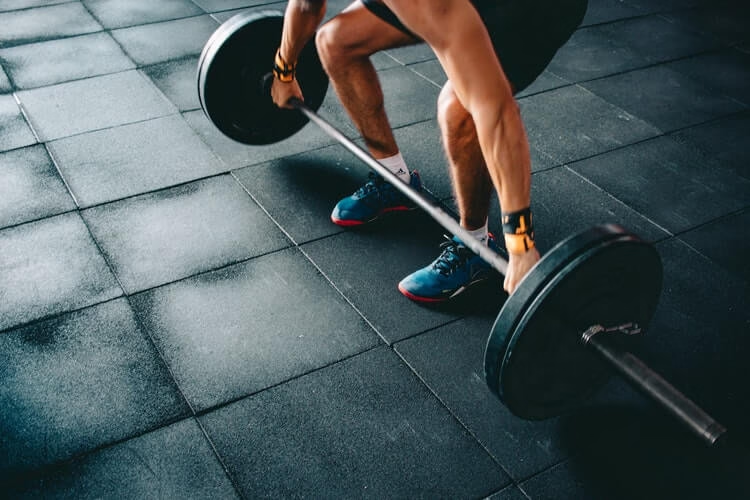
Deadlift. Image sourced via Pexels
The Warm-Up & Cool-Down Routine
A thorough warm-up is not just about breaking a sweat. Its primary purpose is to raise your deep core muscle temperature and stimulate the flow of synovial fluid to lubricate your joints.
You also lose any stiffness from your resting limbs, increase your tissue elasticity, prime your nervous system and cut down on post-exercise soreness.
An effective warm-up should always pair a progressive pulse-raising activity with targeted mobility drills. To drastically reduce your risk of lifting injuries, we highly recommend structuring your pre-workout routine around a scientifically backed RAMP warm-up protocol. This is a system built around Raise, Activate, Mobilise and Potentiate exercises.
Take the Guesswork Out of Your Safety Routine
Mapping out these specific movements for every workout can be overwhelming. We packaged our exact injury-prevention system into an easy-to-follow toolkit that does the planning for you.
🎁 Limited Launch Offer:
Secure Lifetime Access to the RAMP Warm-Up & Safety Toolkit (Built on the RAMP protocol)
today for just £12.99 (Standard price £19.99). Limited to the first 50 lifters!
In addition to your warm-up, it’s equally important to prioritise your recovery and do a thorough cool down after exercise.
Gradually decreasing your cardiovascular intensity before coming to a complete stop allows your heart rate to recover safely, while performing gentle post-workout stretches will safely lengthen tight muscle fibers and kickstart the tissue repair process.
Pre-Exercise Stretching Guidelines
Timing is everything when it comes to flexibility training. You should always perform your preparation stretches immediately after your initial warm-up phase is complete.
Trying to stretch completely cold muscles is counterproductive because the tissue lacks the blood flow and warmth necessary to stretch effectively. Forcing a deep stretch can actually trigger a defensive stretch reflex, leading to micro-tears or muscle strains.
Try to stretch all the main muscle groups in your pre-exercise stretching routine. For the best results focus on dynamic stretching, rather than long, static holds. This means focus on active movements that mimic the exercises you are about to perform.
If your workout involves heavy lower-body patterns like a barbell deadlift, take the time to thoroughly prep your thighs, glutes and calves before starting the session. This targeted preparation ensures your joints can move through a full, unrestricted range of motion, while under a heavy load.

Hamstring Stretch. Image sourced via Pexels
Protecting Your Spine and Lower Back
The spine bears the brunt of axial loading during heavy compound lifts. When lifting, always focus on keeping a neutral spine, creating a naturally straight line that allows your skeleton to safely distribute forces.
Keep your movements slow and controlled, and ensure your abdominals are locked in to support your back naturally.
Beyond muscle tissue, high-load resistance training is highly effective at increasing bone mineral density and joint resilience over time. Maintaining tension in your core throughout every single rep provides built-in insurance for your lower back, so make sure you never slouch or hunch up under a heavy bar.
While a lifting belt isn’t necessary for every casual exercise, and shouldn’t become a permanent crutch, it’s a valuable performance tool when transitioning to heavy compound movements. A common gym myth suggests that wearing a belt makes your core lazy, but sports science suggests the complete opposite.
Clinical trials published in the National Institutes of Health database confirm that a weightlifting belt actively increases intra-abdominal pressure and stabilises the spine during heavy training.
The belt doesn’t replace your natural strength. It actually enhances it by giving your abdominal muscles a rigid wall to brace against. This increases your core muscle engagement, locking your spine into a safe, solid alignment.
For a great combination of safety and performance when using a lifting belt, make sure you train in the right sequence. Master your fundamental bracing technique on your lighter warm-up sets first, then clip on your lifting belt for your heavy working sets.
This progressive approach helps you build strong, natural spine protection while maximising your power output and protecting your lower back.
Maintaining a Neutral Spine
A “neutral spine” means no no tilting, bending or leaning. The two most common errors are an anterior pelvic tilt (excessive arching) and rounding of the lower back (“cat back” during deadlifts).
Basic core strengthening exercises are excellent for strengthening abdominals and lower back to support your training and reduce the risk of injury. Good core exercises include sit ups, the plank, and the dorsal raise.
When weightlifting, it is always advisable to keep a neutral spine, creating a naturally straight back. Maintain muscle tension in your abs throughout the lift to support your back and never slouch or hunch up.
Be careful with your lower back when bending down and standing up from a bend. This is particularly important for performing a safe deadlift.
Core Conditioning: How to Protect Your Midline
Basic core strengthening exercises are excellent for building stable abdominal support and reinforcing your lower back against heavy loading.
If you want to develop a highly resilient core, you should mix a variety of static holds and controlled movements into your weekly routine.
For general mid-section strength, classic movements like traditional sit ups are great for targeting the front of your abdominal wall. However, if your main goal is developing deep stability to protect your spine during a heavy squat, holding a rigid plank is a staple for teaching your muscles how to maximise isometric tension under pressure.
Finally, you cannot forget the backside of your core. To balance out your abdominal training and strengthen the muscles running along your spine, incorporating a dorsal raise is highly effective for isolating the erector spinae.
Taking the time to master these bodyweight movements ensures your torso functions as a solid, unshakeable column when you return to the heaving lifting.

Plank. Image sourced via Pixabay
Knee Safety and Joint Alignment
The knees are also vulnerable to injury when weight lifting. When performing lifts, it is advisable never to bend the knees much lower than 90 degrees to the ground.
It is also important to keep the knees behind the toes when bending and to push hard through the heels when raising up, not the front of the foot. This is all good advice to keep in mind for maintaining safety in strength training and for the squat in particular.
Keeping a relatively wide stance and having your feet slightly turned out while performing a lift can also help to support the knees.
Certainly do not point the feet inward or try a very narrow stance when lifting as this puts undue pressure on the knees and can cause injury.
Preventing Knee Vagus
“Knee valgus” occurs when the knees cave inward during a squat or leg press. Keeping the knees tracking directly in line with the second and third toes protects the anterior cruciate ligament (ACL) and meniscus from harmful shear stress.
This inward collapse is incredibly common under heavy loads, and it is usually a stability or motor-control issue rather than a pure strength deficit.
To eliminate knee cave, focus on establishing a stable “tripod foot”. Ensure that the base of your big toe, your little toe and your heel all maintain firm, equal contact with the ground throughout the lift.
As you drive out of the bottom of a squat, actively think about screwing your feet outward into the floor. This mental cue naturally engages your lateral glutes and forces your knees to track safely over your toes, maintaining optimal structural alignment.
While maintaining this alignment is critical, remember that maximising your gains requires progression. Clinical reviews verify that high-load training yields superior adaptations in maximal muscle strength compared to lower-weight alternatives.
Be sure to keep your knees aligned, drive through your heels, and systematically challenge your limits to continue improving your strength gains.
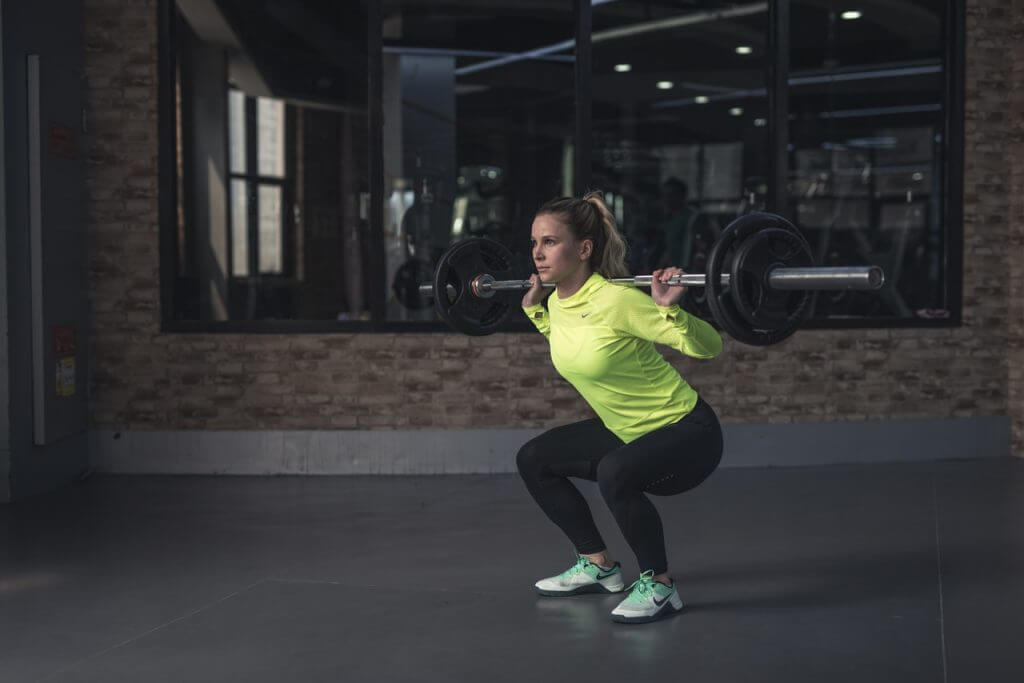
Barbell Back Squat. Image sourced via Pexels
Optimising Diet and Sleep for Peak Performance
Your lifestyle choices outside the gym directly dictate your capabilities inside it. If you are not feeling at your best when working out, this will impact on your performance. If you approach a demanding strength session while under-fuelled or exhausted, your focus slips and your reaction times slow down, increasing the risks of injury.
Ensuring you are well rested before a workout means you feel at your best and your central nervous system is fully primed to coordinate complex, heavy movements with precision.
Nutrition plays an important role, giving your body the energy it needs to generate raw power and repair tissue damage. When poor sleeping patterns or eating habits leave you feeling weak, your physical capacity drops.
Poor sleeping habits or inadequate food and drink intake results in the inability to lift as much as your potential. If you try to make full use of your usual strength, you could also cause an injury to yourself from not realising your new limitations.
True safety means respecting these temporary limitations, checking your loads for any adjustments and matching your training volume to your current recovery baseline.
Your metabolic conditioning also plays a big role in how quickly your body recovers between working sets. Combining your lifting sessions with low-intensity cardio activity improves blood flow and allows your body to transport nutrients and oxygen to your muscle tissues much faster.
Both sleep and using cardio on active recovery days are important priorities to ensure your body has the energy needed to lift heavy weights safely.
Gym Equipment Safety: Know Your Weights and Machines
When working out using the resistance machines at a gym, it’s important that you know how to use weight machines safely and effectively.
Gym machines are great for isolating specific muscle groups, but they function on predetermined paths. This means if a machine’s seat height or pad position is misaligned with your own body’s natural joint pivot points, you end up forcing your body to move through unnatural lines, which can quickly lead to strains.
Before you load any weight onto a machine, always take a few seconds to review the instructional diagrams printed on the frame.
During your gym induction, a trainer should show how to use the most popular machines safely, but make sure you always find out how to use a new piece of equipment before you start loading your weights onto it. If you ever come across a piece of kit you’re unfamiliar with, never guess the setup – ask a trainer.
Knowing your machines is one of the most important aspects of safety in strength training.
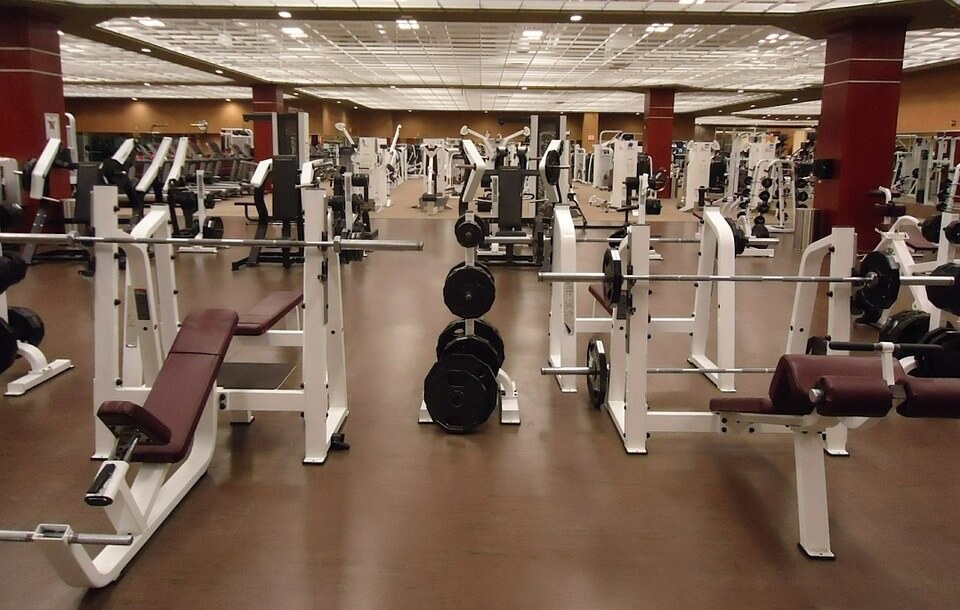
Weight Machines. Image sourced via Pixabay
Free Weight Mastery and Safety Protocols
While machines guide you along fixed tracks, free weights pose a completely different challenge. Because barbells, dumbbells and kettlebells move freely and unsupported in three-dimensional space, your primary muscles must work alongside dozens of micro-stabilisers just to keep the weight balanced on its path.
This open freedom of movement is exactly what builds excellent functional strength, but it also creates unique risks. Even a small lapse in concentration can cause a heavy load to shift off course. And if your primary lifting muscles fatigue before your stabilising muscles do, the load can suddenly shift, placing extreme pressure on your joints.
To use free weights safely, you must actively control the eccentric (lowering) phase of every single rep, treat core bracing as a non-negotiable step, and ensure you have a designated escape route or an alert gym partner on hand before testing your limits on heavy sets.
It’s also important to organise your environment ready for your free weights session. This could include clearing space around your bench or setting up protective safety arms in a power rack.
Essential Spotting Techniques for Heavy Lifts
For exercises where a heavy barbell travels directly over your face or torso, such as a heavy bench press, enlisting the help of a competent spotter is essential.
A spotter serves as your built-in safety net, standing ready to assist the moment your technique breaks down or your muscles reach failure.
It’s a good idea to use a spotter for any heavy lift, as you never know when you may run into difficulties and need help returning the weight.
Having an extra set of hands ready to guide the weight back to the rack allows you to push your boundaries safely. Using a spotter is also a smart move whenever you are pushing your physical limits during intense powerlifting sets.
Before you get ready to lift, establish a clear line of communication with your partner. Agree on the exact number of target reps, confirm if they should assist with the un-rack, and decide on a clear verbal cues, such as “my bar“. This ensures you create a safe team on the gym floor.

Spotting the Bench Press. Image sourced via Unsplash
Pick Your Progression
Load the Bar: Put these safety protocols into action across all your major barbell movements by exploring our Master Guide to Compound Lifts.
Injury Prevention: Ensure your muscles and joints are fully primed to handle those heavy working sets by checking out our master guide to Warming Up for Strength.
Test Your Limits: Learn how to accurately calculate your boundaries before loading up the barbell with our quick guide on Finding Your 1 Rep Max.
💬 Join the Discussion: Gym Floor Safety
Every lifter has faced a close call under the barbell. Let us know how you keep your training safe and how you manage your training environment. Drop a comment below to share your experiences:
- The Gym Floor: Do you prefer using weight machines for stabilised clean movements, or have you fully transitioned to the free weights room?
- Form Corrections: What is the single best piece of technique advice you’ve received that completely cleared up a sticking point?
- Spotting Etiquette: What is your number one pet peeve when asking a stranger for a bench press spot at the gym? And do you always use a verbal cue system (like “my bar”)?
- Spine Protection: Do you rely on deep abdominal bracing, or do you prefer using a lifting belt on heavy sets?
- Close Calls: Have you ever experienced a training injury because you attempted a workout while under-fueled or exhausted?



Leave a Reply