Types of Stretches
There are many different types of stretches. The best type of stretch to perform depends on whether you are stretching before or after your main workout, what you want to achieve from the stretch and your fitness level.
There is no single “best” way to stretch. Depending on whether you are preparing for an explosive lift, winding down after a tough run, or working purely on long-term joint mobility, the specific technique you choose changes your physiological response entirely.
To get the most out of your training and avoid injury, it helps to understand the different types of stretches and how they affect your muscle tissues. Types of stretches are grouped by how the movement is produced and whether the muscle remains still or stays in motion.
For a complete look at how tissue temperature and genetics affect your range of motion, check out our master Stretching and Flexibility Guide.
The basic types of stretches are active and passive. These can be performed as static, dynamic, ballistic and PNF stretches. Read on to discover more about these different types of stretches.
The page is your sports-science breakdown of the five primary stretching methods you can use in your routine.
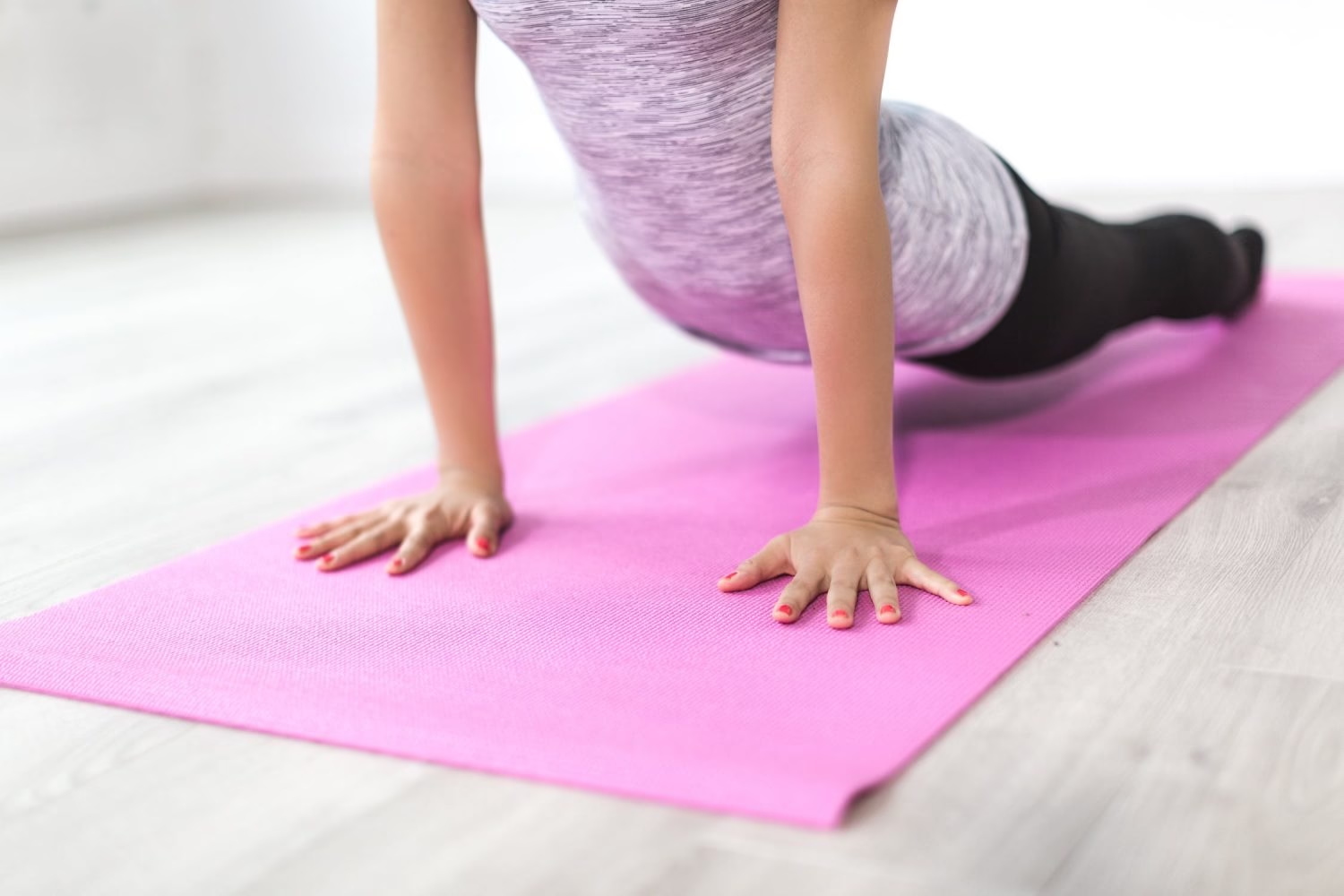
Header image: Pexels.
Active and Passive Stretching
Active stretches and passive stretches describe the exact mechanism used to create tension in your muscles.
Understanding the difference between the two types of stretches allows you to choose the right method based on your energy levels, your balance, and whether you are training alone or with a training partner.
While active stretching forces your body to do all the physical work to stabilise a joint, passive stretching relies entirely on outside assistance to let your tissues relax.
Active stretching
Active stretching is where the opposing (agonist) muscle is used to support the stretching muscle and provide the right amount of tension, without the aid of any object or other person.
These stretches can be simple, such as arm raises, or more complex and requiring strong balance and strength in the agonist muscle.
Sometimes active stretches can be ineffective if the agonist muscle does not have sufficient strength to hold the muscle in place and provide the right amount of tension in the stretching muscle.
These more complex active stretches should only be attempted by advanced exercisers.
Passive stretching
Passive stretches are the opposite of active stretches in that in passive stretches the muscle being stretched is supported by an object, your own bodyweight or another person.
These stretches are easier to hold and do not require strength in the agonist muscle to maintain the stretch.
For example, you could stretch your leg by supporting it on chair or by holding yourself steady against the wall.
Static Stretching
Static stretches are stretches where the muscle being stretched remains still. These stretches are the usual type of stretches performed in exercise programmes because they are effective and very safe.
The risk of injury using static stretching is very low. During a static stretch, the muscle is placed under a moderate tension and held for a certain length of time.
These static holds are typically used as post-workout stretches to help calm the nervous system and lengthen tight tissues. To see how to arrange these into a relaxing routine after a heavy session, take a look at our targeted Floor Post-Workout Stretches.
Because static stretching requires zero explosive movement, it calms the nervous system and lowers cortisol (the stress hormone). Performing a light static routine right before bed is great tool for calming any evening restlessness and improving sleep quality. Read more about how overnight recovery impacts your strength gains in our Sleep & Recovery Guide.
Dynamic Stretching
Dynamic stretches are more advanced stretches which puts the muscle through a steadily increasing range of movement, in which it lengthens then shortens a number of times to steadily stretch the muscle.
For example, steadily increasing the depth of a lunge to stretch the legs or circling the legs through an increasingly large range of movement.
Dynamic stretches are often used by sports participants and athletes as they are ideal for mimicking the exact movements of the upcoming training session. If you are heading straight to the gym floor now, you can find a complete routine in our Pre-Workout Preparation Stretches guide.
Dynamic stretches have a higher risk of injury due to the large movements involved, so novice exercisers should stay with static stretches.
Ballistic Stretching
Ballistic stretches are movements where you use momentum to repeatedly bounce in and out of a stretch at the end of the range of motion.
Ballistic stretches have very much fallen out of favour among exercise professionals due to evidence showing that ballistic stretching not only has a higher risk of injury but actually reduces the flexibility of a muscle in the long term.
This is because the bouncing movement causes tears in the muscle fibres and the resulting scar tissue causes a decrease in the range of movement achievable over time. Ballistic stretches are best avoided.
PNF Stretching (Proprioceptive Neuromuscular Facilitation)
PNF stretches (proprioceptive neuromuscular facilitation stretches) are advanced methods used mostly by physiotherapists to safely increase muscle length and joint flexibility.
PNF stretching uses manipulation of the nervous system via the stretch reflex to gently increase range of movement in the muscle. These stretches need a good understanding of PNF techniques.
Pick Your Progression
Next Step: Ready to explore the big picture of joint mobility and muscle health? Head over to our foundational Stretching and Flexibility Guide.
Prime Your Muscles: Preparing to hit the gym floor? Discover active, dynamic routines designed to safely prepare your body before you lift in our Pre-Workout Preparation Stretches.
Recovery Mode: Finished an intense training session? Jump straight into our relaxing, passive holds designed to boost your recovery in our guide to Floor Post-Workout Stretches.
💬 Share Your Thoughts: Stretching Styles
We want to hear about your flexibility training! Drop a comment below to share your experiences with the community:
- Before vs. After: Which specific types of stretches do you find yourself using most frequently before and after your main workouts?
- Active vs. Passive: Do you prefer the total relaxation of passive stretching with a chair or resistance band, or do you like using active stretching to test your balance and core strength?
- Advanced Techniques: Have you ever tried PNF stretching with a training partner or therapist, or do you strictly prefer to stretch alone?
- Old-School Habits: Did you grow up doing old-school ballistic bouncing stretches before sports science proved they were best avoided?
- Your Favourites: What is your ultimate go-to dynamic stretch to get your hips or shoulders moving fluidly before a heavy session?



Leave a Reply