Bodyweight Exercises
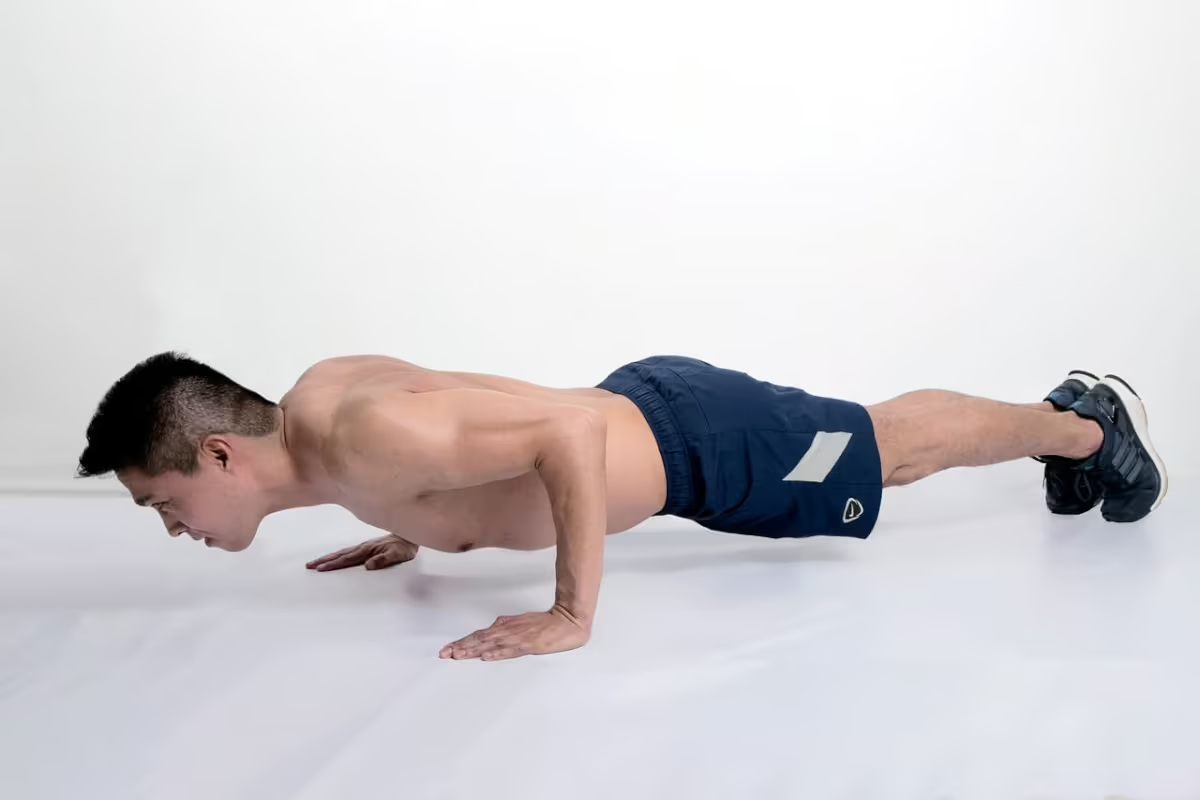
Bodyweight exercises are multi-joint, functional movements that use your own body mass as primary resistance.
Because they require zero loads or gym machines, calisthenics training forms an exceptional foundation for building raw relative strength, mastering joint mobility and enhancing body control.
Quick Bodyweight Index
Upper Body
Core & Trunk
In contrast with external loading, bodyweight work requires deep neuromuscular activation to control your frame through free space.
While heavy compound lifts are unmatched for absolute power, equipment-free training is perfect for carving out structural symmetry, joint health and a lean athletic physique.
Header Image: Pixabay
Why Bodyweight Training Belongs in Your Routine
Real-World Functional Power:
True fitness is about how easily you can move your own body. Mastering classic moves like unassisted pull-ups and strict parallel dips builds a level of control, balance and athletic power that lifting heavy weights on a gym machine simply can’t match.
Unmatched Core Strength:
Free-body movements don’t have back pads or guide rails to keep you steady. To complete a clean press-up or squat, your abs, lower back and sides have to lock tight to support your spine and keep you completely balanced.
Joint Protection and Longevity:
Because your limbs move naturally without being forced into artificial machine tracks, calisthenics exercises are incredibly joint-friendly. They strengthen your ligaments and small stabiliser muscles safely.
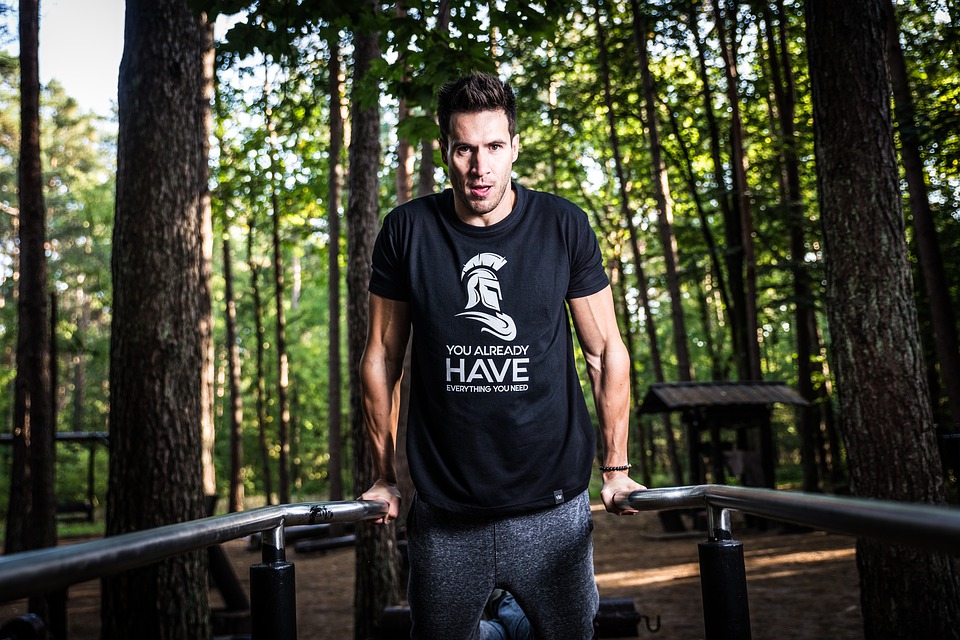
Parallel Bar Dips. Image sourced via Pixabay
Essential Bodyweight Movement Patterns
A well-rounded, equipment-free routine should focus on horizontal pushing, vertical pulling, single-leg control and isometric holds to shape a balanced, resilient body.
Upper-Body Pushing and Pulling:
Foundations like the Press-Up shape a strong chest (pectorals) and front shoulders, while the Chin-Up and Pull-Up are the ultimate secrets for widening your upper back (the lats) and building explosive arm power.
To hammer the lower chest and triceps, parallel Dips offer incredible muscle-building benefits.
Lower-Body Foundations:
The basic Bodyweight Squat is excellent for unlocking tight hip joints, building knee mobility, and creating solid leg drive across your thighs (the quadriceps and hamstrings).
To fix strength imbalances between your legs, training the unweighted Lunge forces your glutes (buttocks) and core to work together perfectly.
Trunk Stability and Core Integrity:
Building a powerful core requires a mix of dynamic exercises and isometric holds. Sit Ups or Abdominal Crunches help tone and condition the abdominal wall, while a perfectly locked Plank trains your deep abdominal muscles and erector spinae to shield your lower back from injury.
To safely strengthen your spine, the Dorsal Raise targets the muscles running along your mid to lower back.
Did You Know?
Linguistic “Beautiful Strength”: The technical term for bodyweight training, Calisthenics, originates directly from a combination of the ancient Greek words “Kalos” (meaning beauty) and “Sthenos” (meaning strength). The phrase was first historically documented to describe the legendary physical training regimens of Spartan warriors.
Can Calisthenics Replace Gym Weights?
Most commercial gym tracks can be easily replicated using nothing but space on the floor. While weight machines let you isolate a single muscle with heavy stacks, bodyweight movements recruit massive chains of helping muscles simultaneously to control your balance.
If you want a cost-effective, flexible and highly efficient way to build lean muscle without gym equipment or free weights, structuring a targeted home calisthenics program is a great solution.
All you need to get started is an exercise mat to make floor work comfortable and a commitment to hitting perfect form on all your movements.
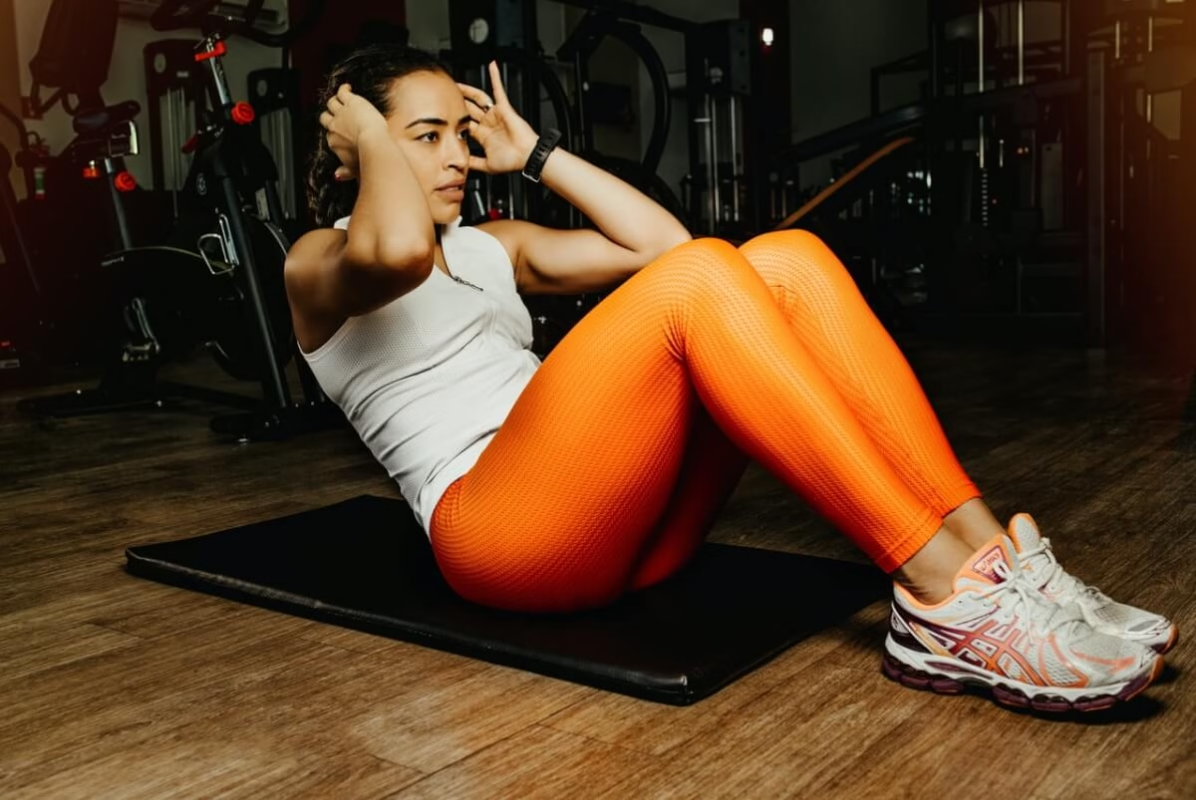
Image sourced via Pexels
Bodyweight Equivalents for Popular Weight Machines
By mapping your body weight against traditional gym equipment patterns, you can effectively hit every muscle group from your chest to your calves. Transitioning away from free weights and cables requires altering your angles to maximise leverage and tension.
Explore our comprehensive, step-by-step guides below to master the foundational mechanics of weight-free training and discover how they can mirror your favourite gym equipment:
Press-Ups:
This foundational movement targets your chest (pectorals), front shoulders and triceps along a horizontal plane. It serves as the ultimate equipment-free alternative to the standard barbell bench press or commercial chest press machine.
Chin-Ups & Pull-Ups:
By forcing you to pull your entire mass vertically up to a bar, these variations stand as the absolute gold standard for widening your back (the lats) and building arm power. They replicate the exact mechanical pulling motion of a gym’s cable lat pulldown machine.
Parallel Dips:
Pushing your body vertically on parallel bars heavily targets the lower chest and triceps. It delivers an intense muscle-building stimulus that perfectly substitutes for a decline dumbbell press or a seated machine chest press.
Bodyweight Squats & Lunges:
These foundational lower-body movements build clean mobility, deep hip flexibility and baseline leg drive across your thighs (the quadriceps and hamstrings). They train the identical pushing patterns of a mechanical leg press machine without loading your spine.
The Plank & Dorsal Raise
The ideal bodyweight core stability workout. This pairing trains isometric core endurance and spinal extension. Holding a plank conditions your abdominal wall much like a cable crunch, while the dorsal raise isolates your lower back muscles, offering a spine-friendly alternative to a weighted hyper-extension bench.
Did You Know?
- Accelerated Waste Removal: Much like post-workout static stretches, moving your joints through full-range bodyweight movements acts as a mechanical pump. This gentle muscle contraction assists your lymphatic system to flush out metabolic waste products built up during heavy training, helping to actively mitigate next-day muscle soreness (DOMS).
- Elite Core Muscle Activation: Electromyography (EMG) tracking published in clinical fitness reviews shows that advanced calisthenics athletes demonstrate equal or superior deep abdominal recruitment compared to heavy weightlifters. Landmark spine biomechanics research confirms that bodyweight stability movements force your entire abdominal wall into a near-maximum voluntary co-contraction to shield the spine and hold your frame against gravity.
Pick Your Progression
Target and Isolate: Once you’ve finished your bodyweight training, head over to our comprehensive directory of Isolation Lifts to safely target single muscles using machines and cables.
Prime Your Joint Mobility: Moving your full body weight requires mobile shoulders and hips. Protect your connective tissues by reviewing our guide on Pre-Workout Preparation Stretches before dropping into a deep squat.
Optimise Your Recovery Fuel: Building lean muscle with bodyweight exercises requires the right nutritional building blocks. Explore our Nutrition & Fueling Guide and complementary Supplements Guide to discover how to properly fuel your muscles and maximise your gains.
💬 Join the Calisthenics Discussion!
We’d love to hear about your experience training with pure bodyweight movements.
- Which are your favourite bodyweight exercises for each body part?
- Are there any unique or challenging calisthenics variations you think we should add to this list?
- What is your personal record for holding a perfectly strict plank position?
- What bodyweight milestone are you currently working toward? Your very first strict unassisted pull-up or a full set of parallel bar dips?
- How do you like to pair your calisthenics work with your regular lifting routine? Perhaps as warm-ups or high-rep finishers?
- Have you ever tried replacing your heavy gym workouts entirely with bodyweight movements? What changes did you notice in your joint health and core strength?
Let us know in the comments section below!

Leave a Reply