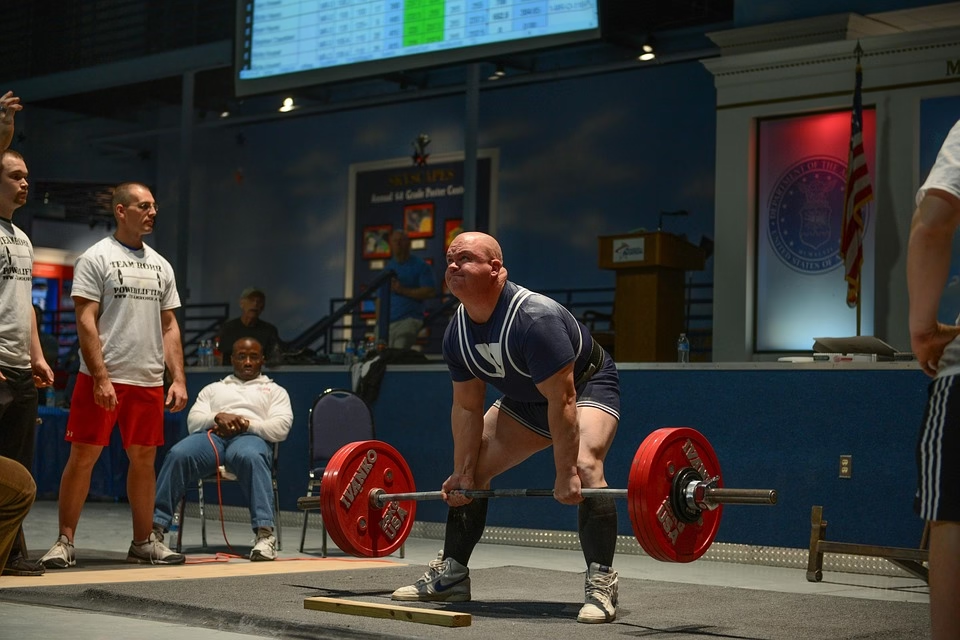
Last Updated on October 22, 2026
Your 1 rep max is the maximum amount of weight you can lift for a single, clean repetition of a given exercise. It’s the definitive tool used to accurately measure your strength progress.
It’s also useful to know your 1 rep max for structured training programmes, allowing you to calculate your ‘training zones’ depending on the exact athletic development you want to achieve: strength, power, hypertrophy (size) or endurance.
How to find your 1 rep max
Training programmes rely on percentages of your 1 rep max to optimise your performance. For example, a training programme for developing strength might require you to complete 3 sets of 5 repetitions at exactly 80% of your 1 rep max.
If you don’t know your maximal lifting capacity, it’s impossible to calculate your training loads accurately or benefit fully from your training programme.
However, it’s essential to prepare your body properly. An all-out, max effort lift places huge demands on your nervous system and joints. This isn’t something to attempt early on in your routine and it should be avoided by beginners in the world of strength.
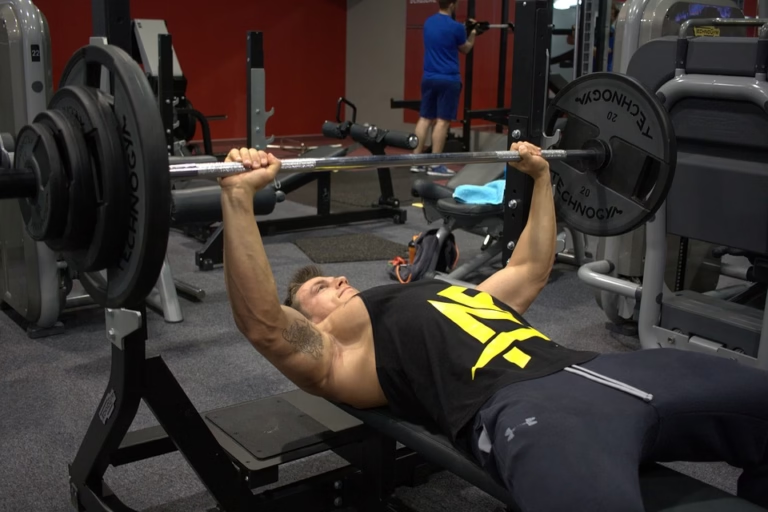
The standard movements lifters use to test a 1 rep max are the classic powerlifts: the squat, bench press and deadlift. However, you can do a max lift test for any multi-joint compound exercise.
Whichever lift you choose to test, tracking your 1RM allows you to track your power and technical proficiency over time.
Before attempting any max lift, ensure you complete a thorough, sport-specific warm-up. From there, you can find your maximum weight using one of two methods: calculating a mathematical prediction or going for the real thing – a true, physical 1 rep max test.
Header image credit: Pixabay
Finding Your Predicted 1 Rep Max
If you know the maximum weight you can lift for a specific rep range before hitting failure (such as a heavy set of 6 reps), you can use that data alongside a calculation chart to predict your maximum limit.
This renowned calculation system was developed by fitness expert Matt Brzycki in the strength training text, “A Practical Approach to Strength Training“.
Using the table below, simply take the weight you lifted and divide it by the percentage decimal corresponding to your maximum completions (for example, 75 percent equals 0.75). This provides a highly accurate approximation of your single-rep max limit.
For example, if you can complete a maximum of 6 clean reps with 250 lbs on the deadlift, the Brzycki chart notes that this workload represents roughly 83% (0.83) of your maximum power.
By dividing 250 by 0.83, you get 301 lbs: your predicted 1 rep max for the deadlift.

Finding your true 1 rep max

To establish a true 1 rep max rather than a mathematical prediction, you will need to complete a warm-up and perform a series of single-repetition sets, gradually scaling up to a peak target weight.
Choose a weight near the amount you think might be your maximum lift. If you can lift that weight with enough speed or with enough remaining power to attempt a second rep immediately, then this is too light to represent your 1 rep max.
Rest for 3 to 5 minutes to fully restore energy to your muscles. Increase the weight slightly and attempt it again.
You will reach your true 1 rep max when you encounter a load that you can successfully lift for exactly one complete rep with perfect form, but physically could not complete a second time.
The safest way to find your 1 rep max
For solo lifters, the safest way is to find your mathematical predicted 1 rep max first, during a standard training session. Then, after you’ve fully recovered, use that predicted baseline to strategically select your target weights for a true 1RM test in your next training session.
This data-driven approach removes guesswork and minimises unnecessary repeated attempts that can be exhausting and compromise your lifting form.
Test your 1 rep max periodically to track your progress. Testing every 8 to 10 weeks is ideal. More frequent testing is unnecessary and can stall your recovery, as a maximal test is strenuous for your muscles, tendons and central nervous system.
Once you’ve established your 1RM, use this metric to customise your working percentages to ensure your training is aligned with your fitness goals.
With this knowledge you can modify your training routine to ensure you aren’t lifting too heavy or too light, whether you are training for strength, endurance, power or size.
Have you tested your physical limits? What is your current 1 rep max milestone for the deadlift, squat or bench press? Share your performance goals and lifting achievements in the comments below!
Pick Your Progression
Master the ‘Big Three’: Your 1-Rep Max is only as good as your structural execution. Ensure you’re hitting flawless depth and form by exploring our standalone Squat, Bench Press and Deadlift master guides.
Secure Your Grip: When testing maximal weights on heavy pulls, your hands can often give out before your target muscles actually fatigue. Learn when and how to deploy heavy-duty wrist support by studying our Weightlifting Straps Breakdown.
Fuel the Effort: Shifting maximal loads places stress on your central nervous system. Accelerate your recovery and build muscle by optimising your diet with our Nutrition and Fueling Guide.




Leave a Reply