Calf Raise Machine
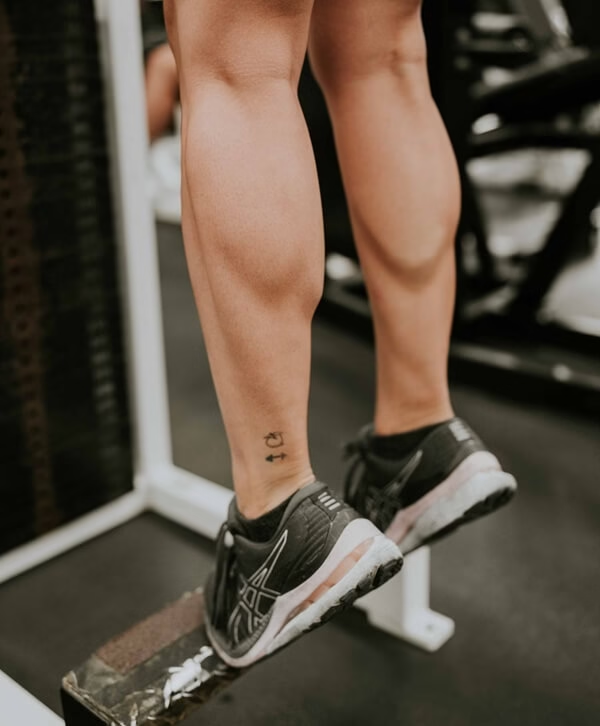
The calf raise machine is an excellent gym-based movement built to pack size and thickness onto your lower legs by using fixed mechanical tracks. By locking your body into a dedicated Weight Machine frame, you can subject the calf complex to heavy resistance without needing to balance a free-standing barbell or worry about losing your footing.
This equipment isolates the lower leg by stabilising your torso, allowing you to focus entirely on deep ankle extensions, remove lower back strain and train the muscles to complete failure under control.
While the heavy iron stacks, adjustable thigh bars and sliding platforms might seem intimidating to gym newcomers, these machines are highly intuitive to operate.
Once you understand the mechanics, it becomes a reliable tool for tracking your lower-body hypertrophy and packing volume onto your legs.
Header image: Pexels
Targeted Anatomy: Seated vs. Standing Gym Gear
The primary reason to use gym machinery for your calves is the ability to mechanically isolate the two distinct sections of the lower leg.
Swapping between different machine frames alters how the load hits your lower legs. Using a seated bench setup builds foundational width through the lower soleus. Switching to a standing leg press platform shifts the mechanical tension directly into the upper gastrocnemius.
- The Soleus Muscle: This wide, flat muscle sits beneath the surface layer and provides the actual width and side-profile thickness to your calves. When you use a seated calf machine, your knees are bent at a 90-degree angle. This bend slackens the upper calf muscle, forcing the soleus to take over 100% of the workload.
- The Gastrocnemius Muscle: This is the highly visible, twin-headed muscle at the top of the leg that creates the classic “diamond” definition. To target this area, you need to use a standing machine or a leg press sled where your legs stay straight, forcing the upper calf fibres to stretch fully.
If you want to learn more about how seat adjustments isolate alternative lower-body angles, check out our masterclass on the Seated Adductor and Abductor Machines.
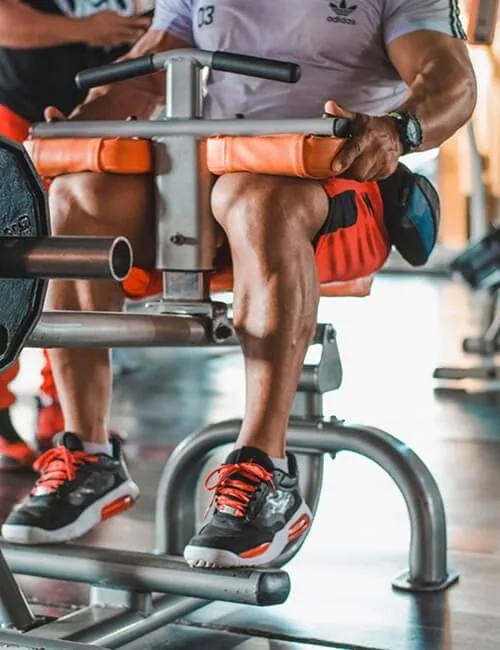
Seated Calf Raise Machine. Image sourced via Pexels.
Benefits of Fixed Resistance Machines
Training your lower legs with commercial gym equipment offers unique advantages for muscle growth:
- Seamless Progressive Overload: Tracking your progress is completely effortless. Instead of trying to hold heavy dumbbells that fatigue your grip, you can steadily increase the resistance week over week by simply dropping the pin further down the weight stack.
- Total Spinal Protection: Heavy free-weight calf training can put a lot of compressive force on your spine. Isolation machines remove the torso from the equation entirely, channeling every single pound of resistance directly into the ankle joints instead of your lower back.
- Maximum Mechanical Tension: Because you do not have to worry about tipping over or balancing, you can safely push your sets past the point of normal fatigue, using high-repetition drop sets to maximise muscle growth.
- Better Compound Carryover: Your calves are needed to support movements that involve your knees, hips and ankle joints. Building strong, resilient calves on a machine gives you a much better structural foundation to transfer power from the floor during heavy compound pulls like the Barbell Deadlift and the hamstring-focused Romanian Deadlift (RDL).
Step-by-Step Gym Machine Execution
Whether you are stepping into a standing rack or sitting at a loaded seated bench, the way you perform the calf raise remains highly disciplined.
- Adjust the pin to a moderate weight on the selector stack to test the range of motion.
- Place the widest part of your feet on the textured foot block, leaving your heels suspended completely in free air.
- Drop the padded stabilisation bar tightly over your knees (if seated) or rest the shoulder pads comfortably on your traps (if standing).
- Unlatch the safety lever by driving up onto your tiptoes, grasp the side handles for stability, and keep your core braced to hold a locked posture. This is similar to the rigid torso tension required on a commercial Glute Machine.
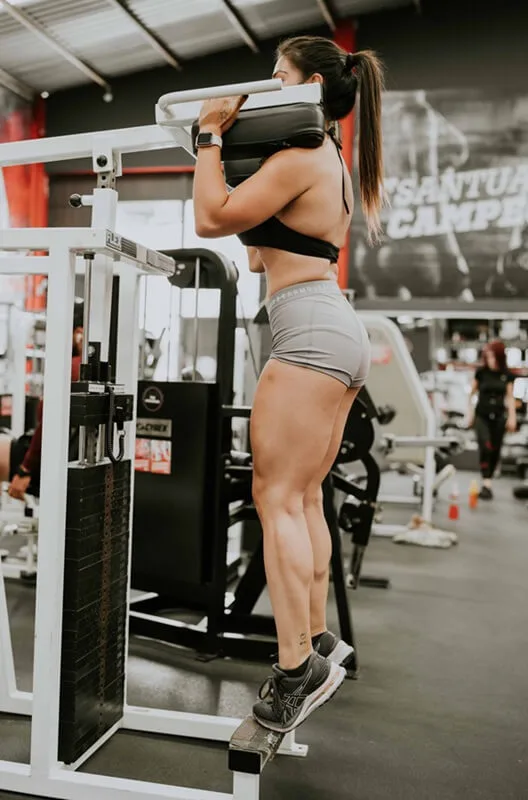
Standing Calf Raise Machine. Image sourced via Pexels
Mastering the Machine Repetition
To trigger real muscle growth, you must break the movement into two distinct, deliberate phases:
1. The Loaded Extension
Inhale as you slowly let the weight stack lower your heels toward the gym floor. Because the machine holds your body on a fixed, guided track, you do not need to worry about side-to-side wobbling. Continue down until your ankles achieve a maximum stretch through the Achilles tendon, pausing briefly at the very bottom.
2. The Peak Contraction
Exhale as you drive down into the foot platform, pushing through the balls of your feet to hoist the weight stack upward. Ride the movement all the way to the top until you are high on your toes, squeezing the calf muscles at the peak. Avoid bouncing the weight plates off the bottom of the stack, as momentum removes the work from the muscles.
Once your set is finished, simply slide the safety hook back into place before relaxing your feet.
Next Step: To isolate the rest of your lower body, explore our comprehensive technical masterclasses for Leg Curls and Leg Extensions.
On The Move: Training away from the gym? You can maintain your lower leg strength at home or while traveling using the zero-equipment Standing Calf Raise.
Complementary Training: To learn more about stabilising your lower leg mechanics during heavy gym days, read our guides on Seated Adductor and Abductor Machines to balance out your hip and ankle tracts.