Glute Machine
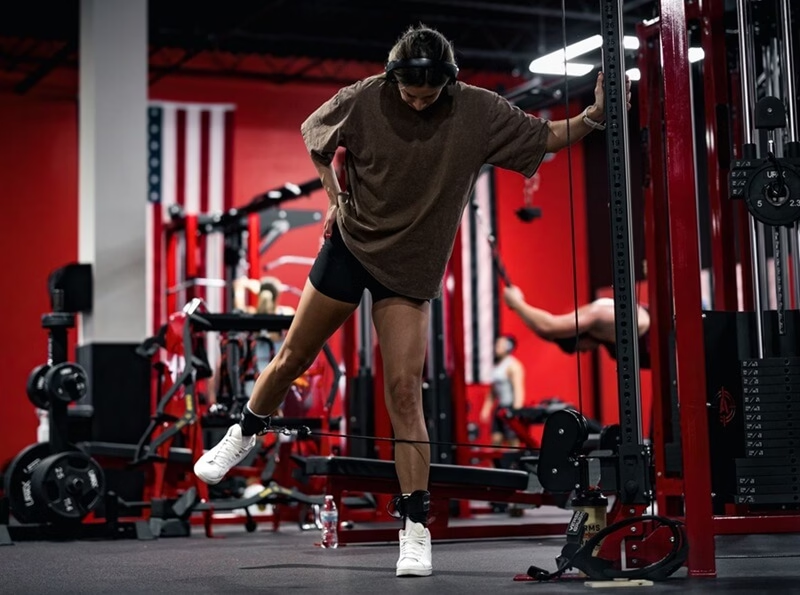
The glute machine is a premier lower-body isolation exercise engineered to build targeted strength, power and definition across the entire buttock area.
By positioning your torso against a gym frame, you can lock your body into alignment and drive resistance backward using your hip extensors.
The specific motion created by this equipment is commonly referred to as a gym-based glute kickback. While this lower-body pattern can also be performed as an equipment-free bodyweight exercise, using a gym machine or low-pulley cable stack allows you to apply progressive weights to maximise your muscle growth.
Header image: Pexels
What Muscles Does the Glute Machine Work?
The glute machine primarily isolates the muscles of your buttocks, while calling on the back of your thighs to assist the lift:
- Gluteus Maximus: This is the largest and most powerful muscle in your lower body, responsible for the main shape of the buttocks and heavy hip extension.
- Gluteus Medius and Minimus: These smaller, deeper muscles sit toward the outer side of the hip and work hard to stabilise your pelvis.
- Hamstrings: The muscle group along the back of your thigh activates to a lesser degree to assist in pulling your leg backward.
Developing strong glutes is highly critical for overall human performance. They provide essential structural support to your upper body and mobility support at the pelvis, driving the hips forward.
Because they are inherently powerful, your glutes are heavily challenged during daily walking, running and when doing compound lifts like heavy squats and deadlifts.
Your gluteal complex acts as a core stabiliser too, even when performing lifts that focus mostly on the upper body, such as the bench press.
To ensure total structural balance across your hips, make sure to pair your glute work with the dual-action Seated Adductor and Abductor Machines.
How to Use the Glute Machine
To safely operate the glute kickback machine, you need to first select a moderate training weight on the side selector stack and adjust the frame components to fit your height.
Most standard commercial gym units use an adjustable leg pad that should sit comfortably behind your working knee.
- Stand facing the machine frame, keeping your non-working leg anchored to the footplate for total stability.
- Lift your working knee forward and rest it securely against the center of the padded lever arm.
- Lean your upper body forward to rest your stomach and chest against the chest pad, keeping your spine perfectly straight. Grasp the front handles and place your forearms on the arm rests to keep your torso in place.
- Drive your working knee downward and sweep your leg backward behind you in a slow, continuous arc to lift the weight stack. Keep your eyes forward and hold your torso completely still.
- Pause and squeeze your glutes at the peak of the movement, then slowly guide your knee forward under control to return the weight to its starting position.
Machine Variation Tip: Depending on your gym, some glute machines feature a standing footplate instead of a roller pad behind the knee. On these upright units, the mechanics remain the same, but you will drive the weight by pushing your foot straight back through the heel rather than lifting from the knee joint.
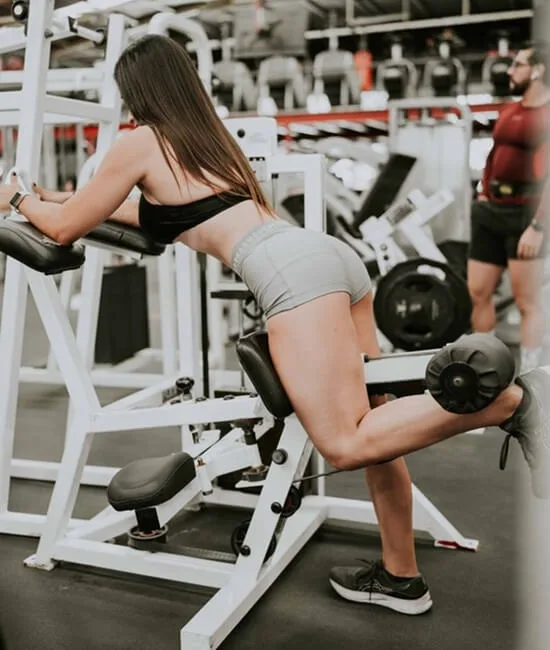
Glute Machine. Image sourced via Pexels.
Cable Kickbacks for Glutes
You do not have to rely exclusively on a dedicated glute machine to isolate your hips. An adjustable cable machine can also be used effectively to target the buttocks.
Simply attach an ankle strap collar to the low pulley, face the weight stack and steady yourself by grasping the supportive frame in front of you. Keeping your chest up and torso stable, slowly sweep your leg backward using your glute muscles to lift the weight.
At the peak of the movement, you will feel an intense contraction in the working muscle. Hold this peak contraction for a second, then slowly release the resistance by allowing your leg to guide forward, bringing the weight stack back down smoothly without letting the plates slam.
As with all machine movements, try to execute the cable kickback for glutes with strict form. The controlled negative phase is just as important as the initial drive for triggering muscle growth.
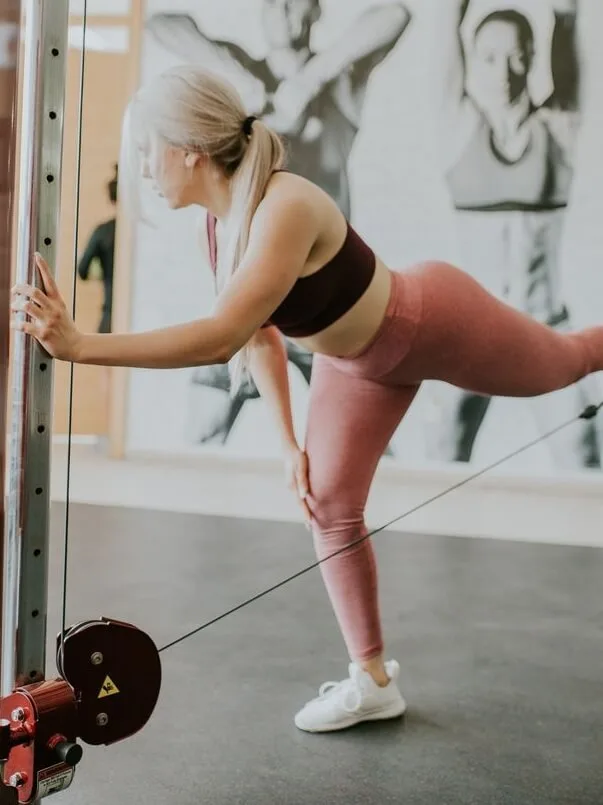
Cable Machine Glute Kickbacks. Image sourced via Pexels.
Optimising Your Glute Workout
Targeted isolation lifts are ideal for finishing off a lower-body training leg day, once your primary heavy movements are complete.
Because these exercises focus purely on the hip hinge without loading your spine, you can safely train the muscles to total fatigue.
To maximise your results, focus intensely on the mind-muscle connection.
Avoid arching your lower back to force your leg higher. Instead, keep your hips level and squeeze the glutes to drive the movement.
Once your session is finished, always remember to perform a few deep, static stretches for your lower body. The glutes are massive muscle groups that carry a lot of tension, so taking the time for a proper cool-down and some dedicated post-workout mobility work ensures you preserve healthy hip tracking for optimal recovery.
Next Step: To balance your lower-body programming and isolate your upper legs, explore our comprehensive technical guide for Leg Curls and Leg Extensions.
Training Away from the Gym? If you are working out at home or want to practice your lower-body hip extensions without a selectorised weight stack, switch over to our functional Bodyweight Glute Kickbacks Exercise Guide.
Protect Your Joints: To ensure your hips, knees, and lower back stay fully resilient against heavy lifting volume, read our masterclass on How to Prevent Weightlifting Injuries and Safeguard Your Joints.
Leave a Reply