Seated Adductor and Abductor
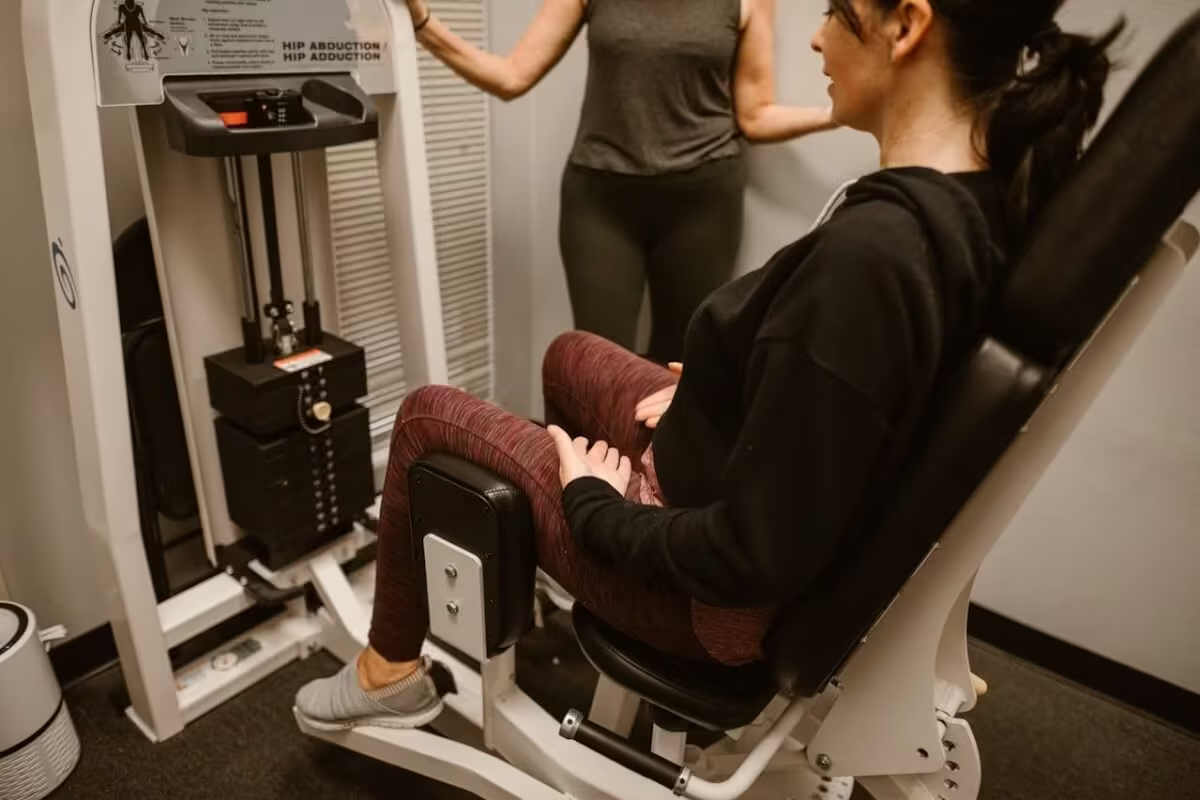
The seated adductor and abductor machines are essential lower-body isolation tools engineered to target the the inner and outer thigh structures with high precision.
While many commercial gyms house these units as separate frames, the majority feature a 2-in-1 combo design. By pulling a selector pin and spinning the knee pads 180 degrees, you can alternate between opening your hips against weight resistance or closing them under close control.
Because both variations lock your upper torso into a secure, seated posture, they allow you to safely train the secondary stabilisers of the pelvis, correct lower-body tracking issues and maximise muscle hypertrophy without loading your spine.
Header image: Pexels
Anatomy Breakdown: Inward vs. Outward Resistance
Combining these movements into a single training session ensures you build structural symmetry across your lower extremities by working two perfectly opposing muscle groups:
- The Adductors (Inner Thighs): Located along the inside of your upper leg, this complex includes the adductor magnus, adductor longus, adductor brevis and the gracilis muscle. Their primary function is to draw your knees inward toward the midline of your body.
- The Abductors (Outer Hips & Glutes): Positioned on the lateral side of the pelvis, this grouping relies on the deep gluteus medius, gluteus minimus and the tensor fasciae latae (TFL). These fibres work together to push your legs outwards away from your core.
Benefits of Complete Hip Complex Training
Integrating these specialised machine tracks into your lower-body splits offers unique structural and athletic advantages:
- Pelvic and Knee Joint Protection: The adductors and abductors serve as the primary steering system for your knee alignment. Weakness in these areas causes your knees to cave inward during heavy movement, leading to tracking issues. Strengthening them helps keep your joints moving along a stable path.
- Under-used Muscle Stimulation: In everyday life, the lateral hip and deep groin tissues are rarely loaded directly to total fatigue. Isolating them with a weight machine ensures these neglected tissues are strengthened properly, avoiding lower-body muscle imbalances.
- Enhanced Compound Foundations: Your inner and outer thighs act as the primary stabilisers when doing heavy compound movements. Building resilient hips on a machine transfers directly into a sturdy base for heavy squats, lunges and deadlifts.
To wrap up your lower-body session and fully isolate the remaining segments of your posterior chain, pair your thigh work with the Glute Machine.
How to Use the Seated Adductor Machine (Inner Thighs)
The adduction phase focuses entirely on drawing the legs together. Because the inner thigh is highly susceptible to pull injuries when trained cold, always prioritise your pre-workout prepartaion stretches before loading the weight stack.
- Sit completely upright against the back pad, placing your feet flat on the pegs with the inside of your knees resting snugly against the outer edges of the pads.
- Disengage the adjustment lever to swing the machine arms out as wide as your current flexibility allows, then lock the pin back into position.
- Brace your core, hold the side handles for stabilisation and keep your spine neutral.
- Squeeze your inner thighs together smoothly to pull your knees toward the center line, compressing the pads together at the peak of the movement.
- Slowly resist the weight stack as your legs glide back out to the wide starting position, feeling a deep, controlled stretch before beginning the next rep.
How to Use the Seated Abductor Machine (Outer Hips)
The abduction phase uses an opposite outward motion to work the lateral glutes. To transition a 2-in-1 combo machine, pull the selector pin, rotate the pads inward and close the machine arms completely.
- Sit on the seat with your knees positioned closely together, resting the outside of your thighs firmly against the inside of the pads.
- Set the machine’s starting lever so the pads are fixed as close together as possible before selecting your weight.
- Engage your abdominals, grip the frame handles tightly, and maintain an upright, rigid posture against the backrest.
- Drive your knees outward away from each other, pushing directly against the pads to lift the weight stack using your lateral hip glutes.
- Once you reach a full outward extension, pause briefly, then slowly control the negative tension as your knees return to the closed starting position.
Strict Form Cue: Avoid overloading the weight stack on either variation. Using excessive weight forces your lower back to twist, your hips to lift off the seat and your hip flexors to cheat the movement, which removes the isolated tension from the thighs.
Zero-Equipment Alternatives: Resistance Bands
If you are away from commercial gym equipment, you can effectively replicate both mechanics using a simple elastic resistance band:
- Home Adduction (Inner): Anchor a resistance band around an immovable object and loop the opposite side around your ankle. Stand sideways to the anchor point and slowly sweep your banded leg across the front of your body against the resistance.
- Home Abduction (Outer): Step inside a short loop band, positioning it securely just above your knees or around your ankles. Keep a soft bend in your knees and take controlled, lateral sidesteps across the floor to work the outer glutes.
Next Step: To balance your lower-body programming and isolate your upper legs, explore our comprehensive technical masterclasses for Leg Curls and Leg Extensions.
Training Away from the Gym? If you are away from home or want to practice your lower-body hip extensions without a selectorised weight stack, switch over to our functional Bodyweight Glute Kickbacks Exercise Guide.
Protect Your Joints: To ensure your hips, knees, and lower back stay fully resilient against heavy lifting volume, read our masterclass on How to Prevent Weightlifting Injuries and Safeguard Your Joints.
Leave a Reply