Triceps Extension
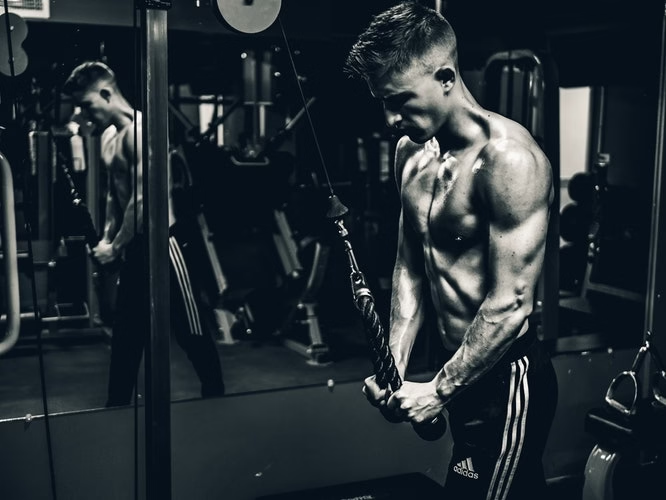
While the biceps often steal the gym spotlight, building truly impressive arms requires shifting your focus to the back of your upper body.
The triceps brachii makes up roughly 60% of your upper arm mass, meaning that mastering the overhead triceps extension is the single most effective strategy for building dense muscle volume and reshaping your physique.
Placing a heavy load directly overhead demands far more than isolated arm strength. To isolate the triceps safely without aggravating your joints, you must coordinate a rigid torso anchor, structural elbow alignment and a controlled range of motion.
This guide breaks down performance mechanics, safety protocols and the best variations to develop your arms while keeping your shoulders resilient.
Header image: Unsplash
What is the Triceps Extension?
The triceps extension is a foundational isolation exercise designed to build strength and definition in the back of the upper arm. This versatile movement can be performed using either free weights or dedicated gym equipment, such as a high pulley cable machine.
When training with free weights, a common variation is the overhead dumbbell triceps extension, where you lower and raise a weight behind your head by bending and straightening your elbows. Alternatively, it can be performed lying down on a bench using a barbell or EZ-bar (a popular variation known as a “skull crusher”).
If you prefer using a weight machine, highly effective options include the cable high pulley machine (for triceps pushdowns) and the seated triceps extension machine, both of which offer guided movement paths to keep constant tension on the muscle.
What Muscles Does the Triceps Extension Work?
The triceps extension primarily targets the triceps brachii muscle. When performed with proper technique, this lift isolates the triceps on the back of your arm, minimizing assistance from auxiliary stabilizer muscles like the shoulders (deltoids) and upper back (trapezius).
The triceps brachii operates as an antagonistic pair alongside the biceps. These two muscle groups work in functional opposition to control the movement of your elbow joint. When you bend your elbow to bring your hand toward your chest, the biceps contract; when you push down and lock out your arm, the triceps take over to extend the elbow.
To set up for a standard standing or seated overhead triceps extension, extend your arms directly overhead so your upper arms are vertically aligned next to your ears. Keep your elbows tucked in and pointed forward rather than flaring out to the sides.
Maintaining completely stationary upper arms, slowly hinge at the elbow joint to lower the weight behind your head. From this deep stretch position, contract your triceps to drive the weight upward, straightening your arms back to the starting position.
Benefits of the Triceps Extension
Because the triceps are rarely fully taxed in everyday, sedentary life, the tissue can lose efficiency and tone over time, leading to a loose appearance around the upper arm.
While you cannot spot-reduce fat, regular triceps extensions spark muscle hypertrophy. This builds a firm, lean foundation that naturally fills out the arm and creates a tight, athletic silhouette.
- Maximises Muscle Growth: Places the long head of the triceps under a deep, continuous stretch that cannot be replicated by standard horizontal pushing movements.
- Fixes Structural Imbalances: Counteracts heavy chest-dominant training, functioning as the antagonistic pair to the biceps. This balances your structural arm pull to prevent elbow strain and forward shoulder slouching.
- Reinforces Core Stability: Pushing a load away from your center of gravity forces your abdominals to maintain an intense, protective isometric brace.
- Builds Functional Power: Directly enhances your lockout strength for heavy compound lifts like the barbell overhead press and bench press.
How to Set Up for the Overhead Triceps Extension
Mastering your setup position is important for joint protection and muscle recruitment. To prepare for the overhead extension using a dumbbell, stand or sit tall and cup both hands firmly around the inner plate of the weight using a “heart-shaped” grip.
When lifting heavy, using a gym bench with a low back support pad is highly recommended. The low back pad helps isolate the triceps brachii by keeping your torso vertical, preventing your lower back from arching and eliminating momentum from your legs and hips.
Coaching Tip: Safely Hoisting the Load
To get into position without straining your shoulders, clean the dumbbell onto the top of your thigh while seated. From there, kick your knee upward to launch the weight, using both arms to catch it smoothly at shoulder height. Once anchored, use both hands to press the weight cleanly above your head to reach the starting position.
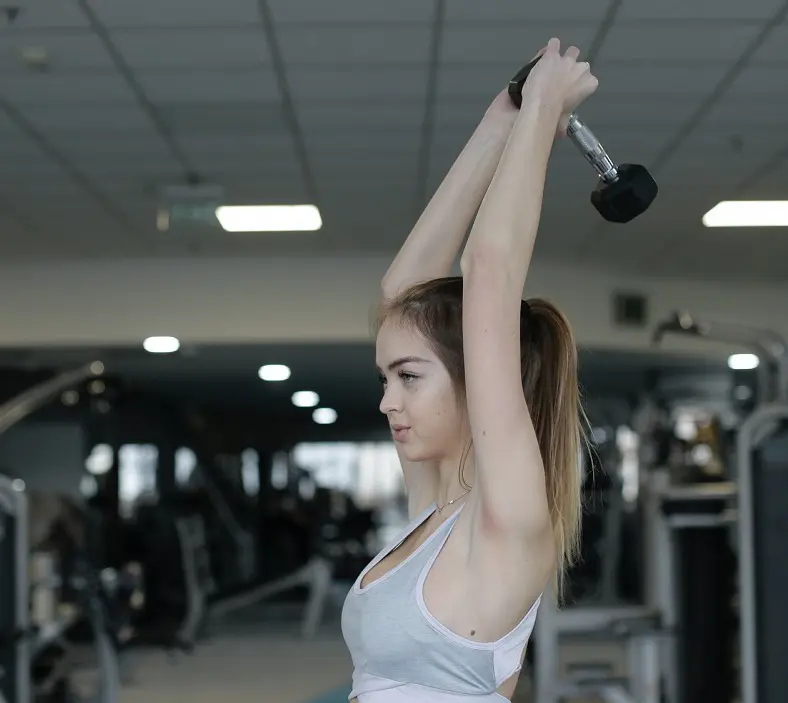
Image sourced via Pexels
Step-by-Step Performance & Technique
To initiate the movement, break at your elbows to slowly lower the dumbbell behind your head in a vertical path. The weight should descend under full control down toward the base of your neck and upper back.
Keep your gaze fixed straight ahead and your cervical spine completely neutral. Avoid craning your head forward to clear the weight. Your upper arms should remain still and locked close to your ears. Moving only your lower forearms maximises isolation on the triceps heads.
Once your elbows reach a deep, comfortable flex at the bottom of the negative phase, contract your triceps to drive the dumbbell back up along the same path. Fully extend your elbows at the peak of the contraction.
Safely Exiting the Lift and Variations
When you complete your training set, carefully reverse your initial setup path: lower the dumbbell back onto your shoulder, bring it safely down to your thigh, and place it firmly on the gym floor.
The overhead extension can also be configured as a unilateral lift by using a lighter single dumbbell in one hand. This allows you to focus 100% of your concentration on one side at a time to expose and fix side-to-side muscular imbalances.
However, because single-arm work requires significantly higher joint stabilisation, beginners should master the two-handed bilateral lift pattern first to ensure structural control.
Variations of the Triceps Extension
While the overhead dumbbell extension is a great staple, incorporating alternative training methods into your routine ensures comprehensive development across all three heads of the muscle group.
Using a mixture of free weights, high-tension cable structures and stable gym equipment allows you to target individual weak points and break through stubborn training plateaus.
Anatomical Classification of Triceps Exercises
Triceps variations are broadly split into free-weight movements that demand core stabilisation and machine variations that offer guided isolation.
By alternating your choice of equipment, you can easily manipulate the resistance profile of the lift to max the mechanical tension across different joint angles.
For lifters looking to boost muscle hypertrophy safely, using a dedicated weight machine is often the most accessible option because the device stabilises your joint path automatically.
However, systematically progressing toward free-moving resistance alternatives over time remains essential for building authentic functional power.
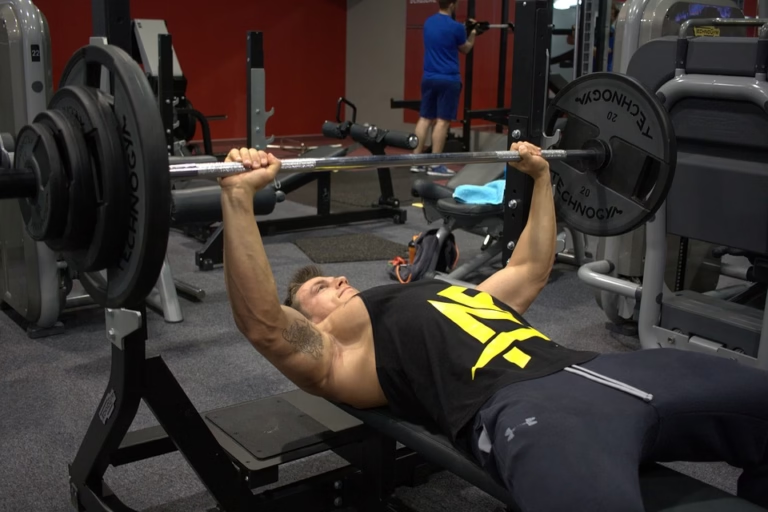
Lying Triceps Extensions (‘Skull Crushers’)
Many weightlifters find that using a barbell over dumbbells is preferable for handling heavier workloads. Commonly referred to as “skull crushers”, the lying triceps extension is one of the most effective movements available for isolating the long head of the muscle.
To perform this movement safely, lie flat on your back on a standard workout bench with your feet planted firmly on the floor. Alternatively, you can perform this flat on the floor with your knees bent to reduce lower back involvement.
Hold an EZ-curl bar straight above your chest using a shoulder-width overhand grip. Using an angled EZ-bar rather than a standard straight barbell keeps your wrists in a natural position, drastically reducing joint strain at your elbows.
Keeping your upper arms perfectly vertical and tucked close to your body, break exclusively at the elbows to lower the bar in a slow, controlled arc.
Aim to bring the bar down just past the top of your forehead or the crown of your head to maintain continuous muscle engagement. Contract your triceps to drive the weight back toward the ceiling, ensuring you track your training loads accurately using our step-by-step 1RM max framework.
⚠️ Safety Warning: Secure Your Grip
Maintain an unshakeable grip on the bar throughout your working sets. Do not allow your wrists to tilt or your gaze to drift. It’s essential to stay fully focused on the vertical bar path so as not to give a painful, literal meaning to the name “skull crusher”!
The Seated Triceps Press Machine
The seated triceps press machine offers a highly stable alternative to free weights, making it excellent for training to muscular failure without requiring a spotter.
To set up, sit tall with your spine flush against the backrest and press the backs of your upper arms against the padded arm supports to ensure your shoulders stay out of the movement.
Reach up to secure the handles with a firm grip and press down smoothly until your arms reach full elbow extension at the bottom. Resist the weight stack slowly on the return negative phase to complete a controlled repetition.
Triceps Pushdowns (High Cable Pulley)
As an alternative to dumbbell training, using a cable crossover pulley system provides smooth, uninterrupted tension across both the lifting and lowering phases of a rep.
While a low pulley configuration is great for performing a classic bicep curl, adjusting the pulley to a high position transforms the machine into the ideal setup for triceps pushdowns.
Attach a rope or straight bar to the high cable hook, tuck your elbows into your ribs and anchor your feet in a stable stance.
Pinning your upper arms completely still next to your torso, pull the handles downward by extending your elbows until your arms are straight. Focus on a slow, deliberate negative release to max the muscle fibre recruitment.
Pick Your Progression
- Perfect Your Arm Balance: Explore isolation movements alongside compound sets in our Bicep Curl Guide.
- Dial In Your Body Composition: Learn nutrition strategies for fat loss and muscle definition in our Fat Loss & Body Composition Guide.
- Master Your Safety Protocols: Protect your joints and prevent lifting strains using our Injury Prevention & Safety Guide.
💬 Join the Discussion
Share your experience training triceps on the gym floor and how you structure your routine:
- Do you prefer targeting the back of your arms using free weights, high-tension cable systems or stable gym machinery?
- What is your favourite triceps extension variation to finish off an intense upper-body pushing workout?
- Have you ever used a specific cue or adjusted your setup to fix common training issues like elbow flaring or joint discomfort?


Leave a Reply