Romanian Deadlift (RDL)
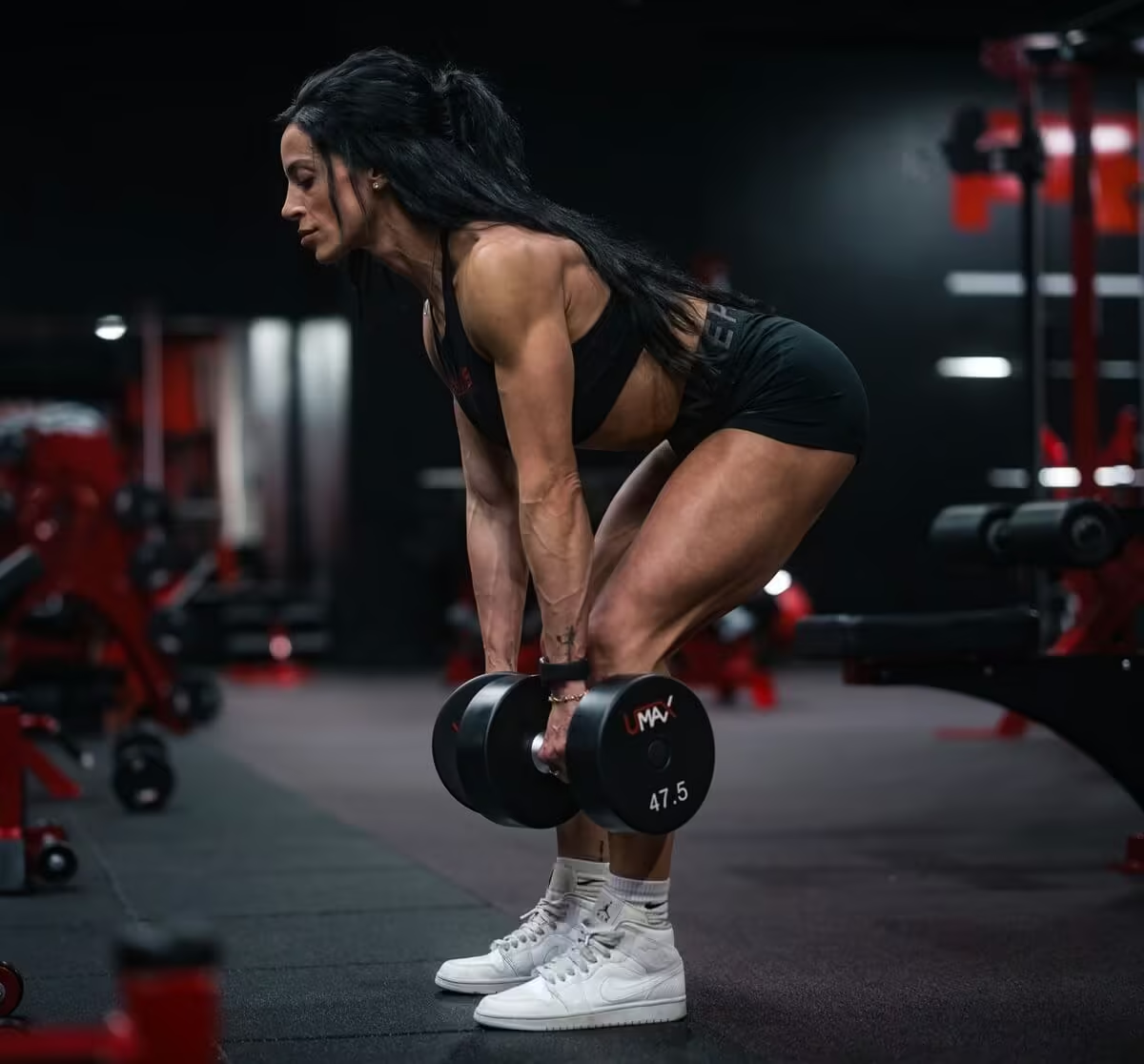
The Romanian deadlift (RDL) is a premier lower-body isolation lift engineered to maximise strength, density and athletic power across your posterior chain. Unlike a conventional pull from the floor, this movement begins from a fully upright, standing position and focuses entirely on a strict hip-hinge pattern.
By eliminating a deep knee bend and keeping the weight suspended in mid-air throughout the set, you can place immense mechanical tension on the hamstrings, sculpt the glutes and build spinal resilience without overloading your joints.
While moving a heavy barbell through a pure hip-hinge can feel unnatural to beginners accustomed to squatting their weights, mastering this lift is really rewarding.
Once you consolidate the relationship between your hips and your ankle stability, it becomes a permanent staple in your compound lower-body programming.
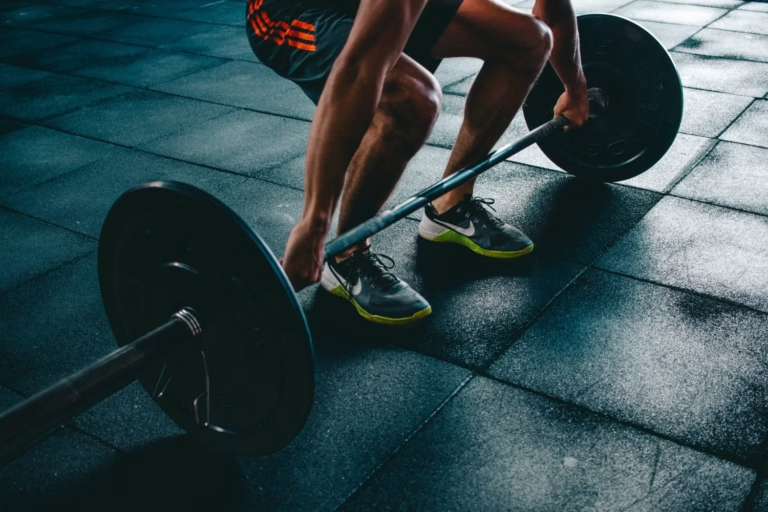
Header image: Pexels
What Muscles Does the Romanian Deadlift Work?
The Romanian deadlift is the ultimate builder for the back of your legs, demanding intense isometric control from your torso to protect your alignment:
- Hamstrings: Running along the back of your thighs, this muscle complex undergoes a strong eccentric stretch under load during the descent, making the RDL a king for hamstring hypertrophy.
- Gluteus Maximus: Your primary glute muscles act as the powerful motor engine of the lift, working at the bottom to drive your hips forward into full extension.
- Erector Spinae (Lower Back): The deep muscles surrounding your spine work statically to keep your back perfectly straight, holding a rigid shield against gravity.
- Upper Back and Traps: Your lats, rhomboids and traps engage completely to “pack” your shoulders down, keeping the bar glued against your thighs.
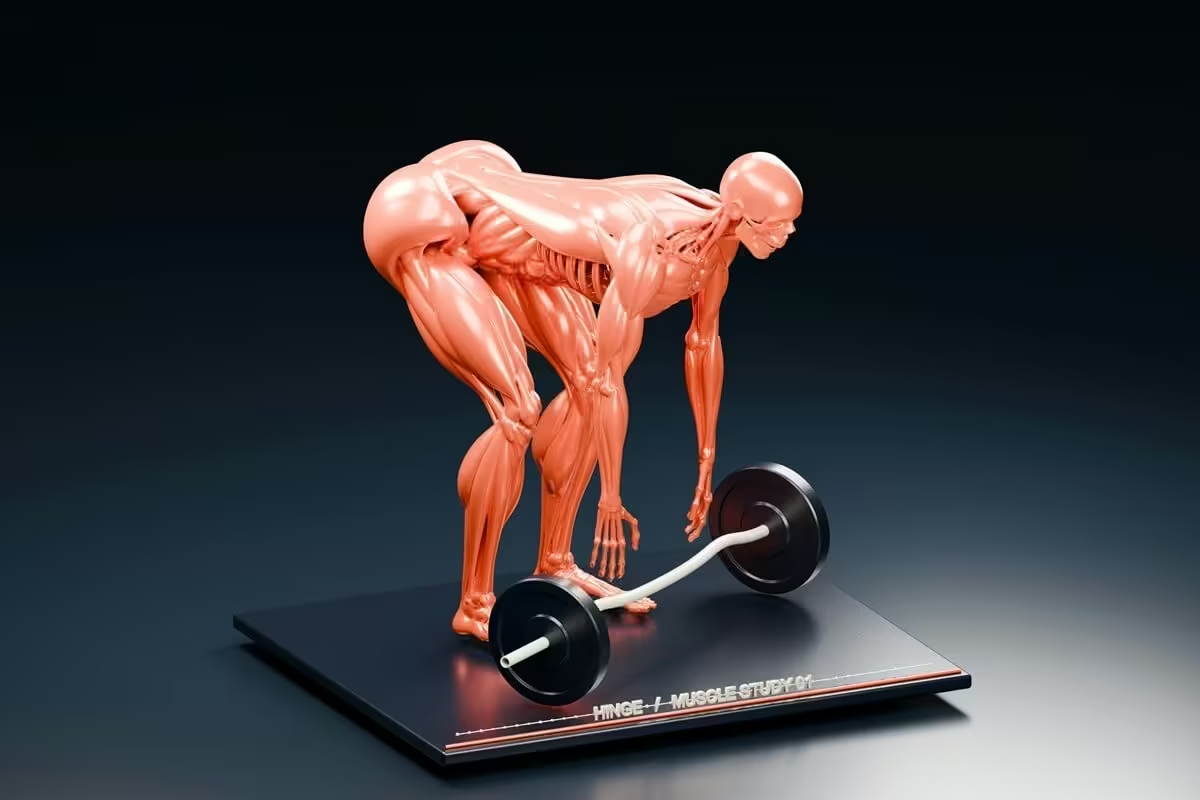
Anatomical 3D model showing an RDL hip hinge. Image sourced via Unsplash.
Grip and Stance Configuration
Before un-racking the weight, establishing a flawless connection to the floor and the barbell is critical for torque and power transfer:
- The Stance: Position your feet roughly hip-width apart. This should be slightly narrower than your standard back squat stance. Your toes should point straight forward or be flared outward by a micro-degree. Ensure your weight is distributed evenly across the tripod of your foot (heel, base of the big toe and base of the little toe).
- The Grip: Grip the barbell just outside your thighs using a standard overhand (pronated) grip. Pull your shoulder blades back and down. This locks your lats into place and prevents the bar from drifting forward, which protects your lower back.
Step-by-Step RDL Technique
To trigger optimal muscle recruitment, execute every single repetition with a slow, controlled negative phase followed by an explosive driving ascent:
- Stand completely upright with the barbell resting against your upper thighs, keeping a high chest and a tight, braced core.
- Unlock your knees slightly to create “soft” joints. Keep your knees locked in this exact soft position throughout the entire repetition – they must not bend any further.
- Inhale deeply and initiate the movement by pushing your hips straight back toward the wall behind you, as if you are trying to close a car door with your glutes.
- Let the barbell naturally slide vertically down your thighs, keeping it in constant physical contact with your legs. Your torso will naturally tilt forward as your hips push backward.
- Continue hinging until you feel a maximum, deep stretch across your hamstrings. This is typically when the bar crosses just below the kneecap or hits mid-shin height. Do not force additional depth by letting your spine round.
- Exhale powerfully and reverse the motion by driving your feet down into the floor and driving your hips forward to stand tall. Squeeze your glutes hard at the peak contraction, avoiding any backward leaning at the top.
Crucial Form Tip: Never let the barbell drift away from your shins. If the bar moves forward by even an inch, physics transforms your lower back into a long lever arm, placing an unsafe amount of shearing force directly on your lumbar spine. Keep the bar scraped tight against your legs.
Key Considerations & Training Variations
Depending on your experience level or any specific equipment limitations, you can scale the RDL to modify your loading mechanics:
- Dumbbell Romanian Deadlifts: Holding a dumbbell in each hand allows your wrists to track more freely along the outer sides of your legs. This is an exceptional variation for beginners learning the hip-hinge or lifters working around wrist discomfort.
- The Floor Touch Fallacy: Unlike a conventional deadlift, the weight plates on an RDL should never touch the floor. Touching the floor forces your knees to bend or your spine to round, completely stripping the targeted tension away from your hamstrings. Your individual flexibility dictates your depth.
Pick Your Progression
From Hinge to Pull: To see how this pure hip-hinge pattern compares to pulling maximum weight directly off the gym floor, read our breakdown on Conventional Barbell Deadlift Technique.
Isolate Your Lower Body: To completely round out your lower-body routine and target the remaining muscle groups of your legs, analyse our execution guides for Leg Curls and Leg Extensions.
Protect Your Joints: To ensure your hamstrings, hips and lower back stay fully resilient, explore our masterclass on How to Prevent Weightlifting Injuries and Safeguard Your Joints.
💬 Share Your Thoughts
We want to hear about your training style! Drop a comment below and share your thoughts with the community:
- Do you prefer performing your RDLs with a barbell or dumbbells and what makes that your go-to choice?
- Where do you typically program RDLs in your routine? Do you do them on your leg day or alongside your back/pull workouts?
- What is the single biggest technique cue or mental trick that helped you finally master the hip hinge without feeling it in your lower back?