Powerlifting
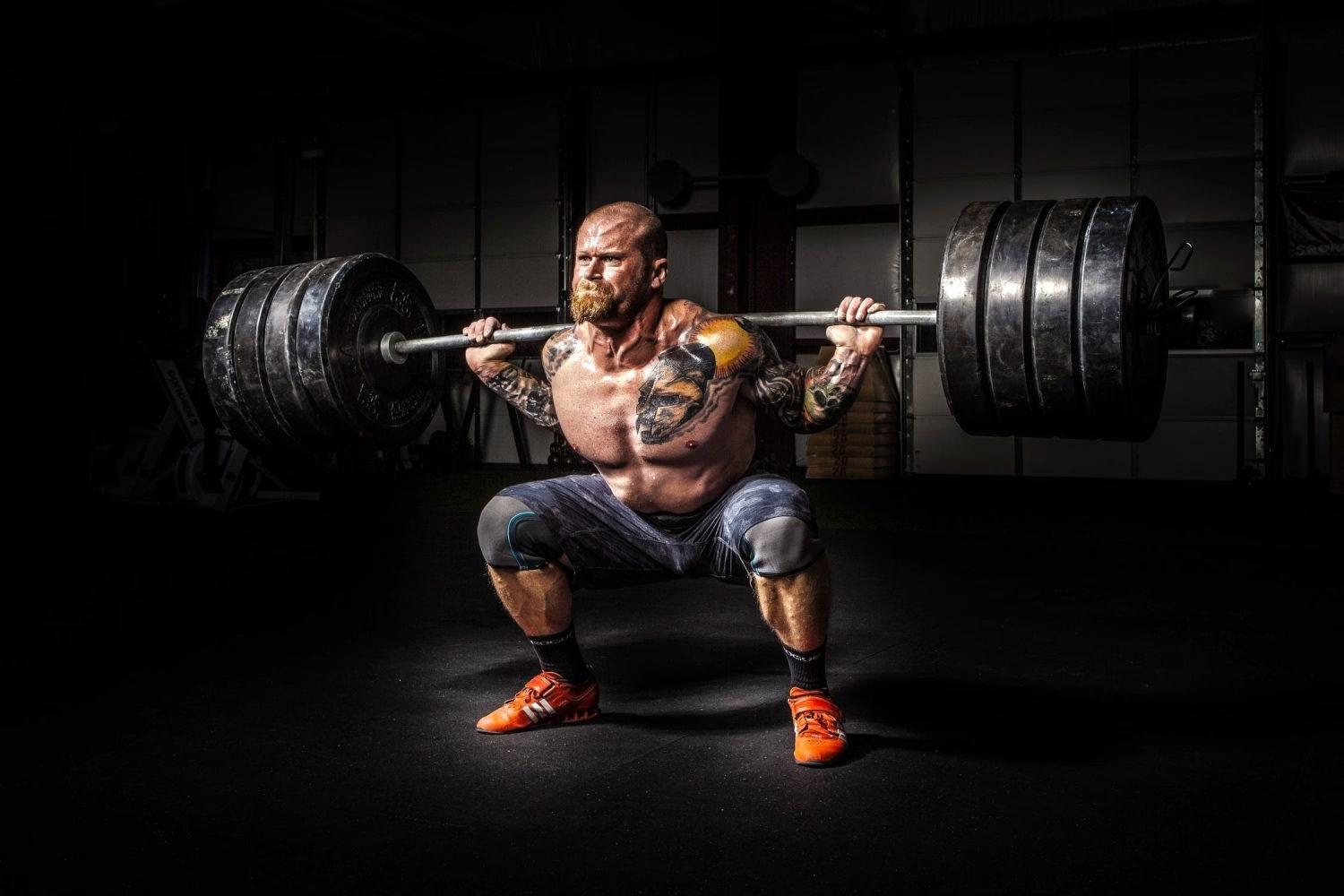
Powerlifting is a competitive strength sport built around three core disciplines: the squat, the deadlift and the bench press.
Powerlifting is a definitive test of limit strength. Each competitor gets three attempts per movement to register their maximum load. The heaviest successful attempt from each lift is added together to calculate their competition total.
At the end of the meet, the competitor who achieves the highest overall total across all three disciplines wins the competition.
Powerlifting strips it back to the bare essentials: raw force, flawless technique and iron will.
The sport boasts a massive following across the UK, US, Eastern Europe, the Baltics and Russia. But wherever you train, the challenge is the same: moving maximum loads under strict rules.
Header image: Pexels
The Standard Powerlifting Competition Order
In a formal powerlifting contest, the lifts are performed in a specific order to test different muscular abilities as fatigue builds.
To ensure the competitors’ safety, between two and five qualified spotters must be in attendance for every attempt. Every movement is governed by its own strict rules, leaving zero room for error if you want to get the thumbs up from all three judges.
In a powerlifting contest, the lifts are performed in this order:
Read on to find out more about the rules for each lift in the powerlifting meet.
1. The Squat: The King of Lifts
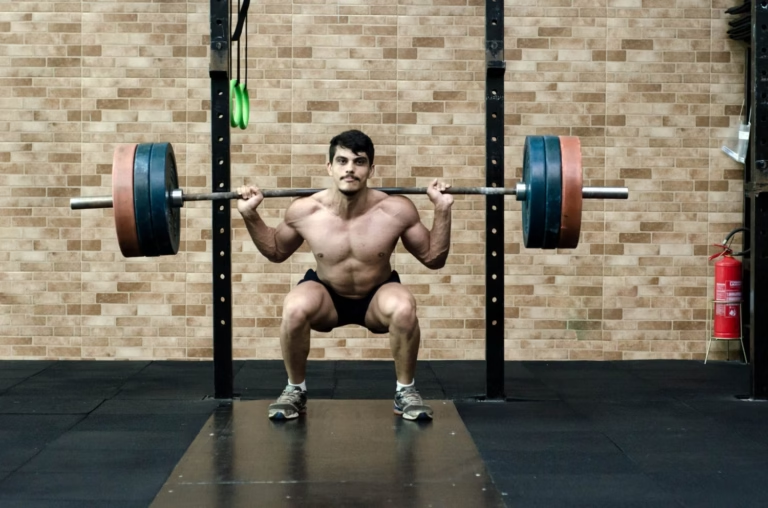
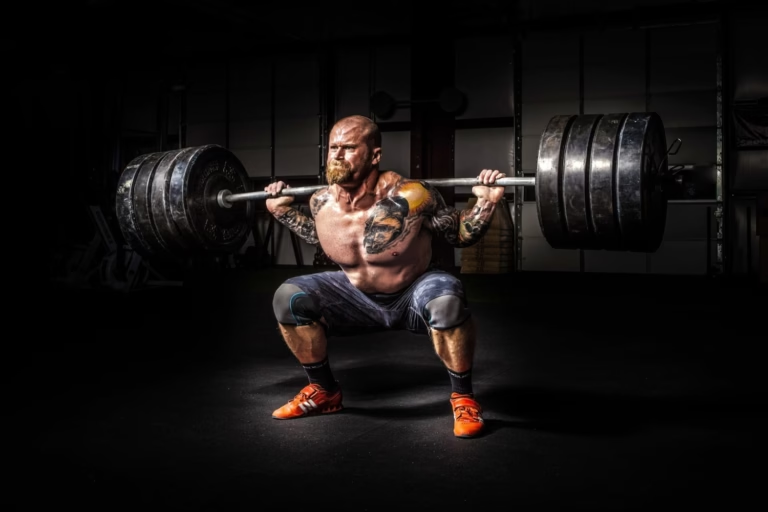
The squat is first up. The objective is to un-rack the barbell and drop into a deep knee bend until the crease of your hips is below parallel to your knees, then power back up to a standing position without stumbling or losing control.
Key Rules:
- No double bouncing at the bottom of the lift.
- Only one upward recovery attempt is allowed.
- No stepping backward or forward mid-lift, as this would count as a stumble.
- Elbows and upper arms must stay clear of your legs.
- At the bottom of the lift, the top surface of the legs at the hip should be lower than the knees.
- Wait for the ref’s “squat” command to start, and the command “rack” before re-racking.
Referees’ Commands:
Wait for the head referee to call “Squat” before beginning the squat, and wait for the “Rack” command after returning to a full lockout before placing the bar back in the J-cups.

Barbell Back Squat. Image sourced via Pexels
2. The Bench Press: Pure Upper Body Power
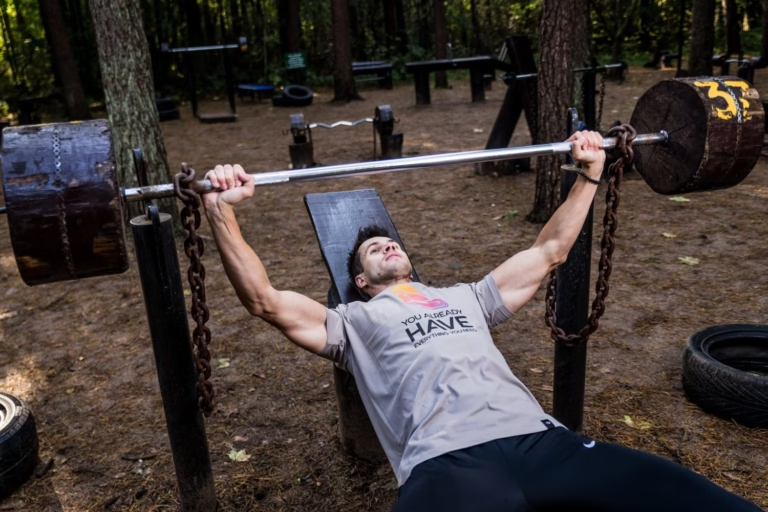
The bench press serves as the second lift of the meet, acting as the ultimate test of upper-body strength. Keep your torso tightly packed against the pad, your feet completely flat on the platform and your bar path stable and precise. No bouncing the bar and no premature presses.
Key Rules:
- Feet must stay in contact with the floor or platform. Lifting heels or sliding feet is an immediate failure.
- Grip width is a maximum of 81 cm between forefingers (this will be clearly marked on the barbell)
- Bouncing the bar off your ribcage or allowing it to sink into your chest after the stop is strictly prohibited.
- Wait for the “press” command before driving the bar up, and the command “rack” to re-rack
Referee’s Commands:
Once the bar is lowered to your chest and comes to a complete, motionless stop, you must wait for the referee to shout “Press” before driving the bar upward. Once locked out, you must wait for the “Rack” command to finish the set.

Bench Press. Image sourced via Pixabay
3. The Deadlift: The Final Showdown
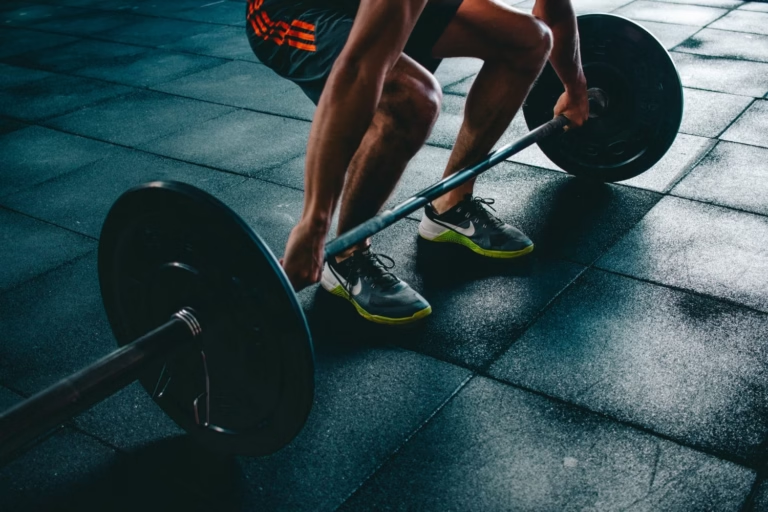
The deadlift is the last lift of the meet and is often the point where competitions are won or lost. It’s a test of total-body pulling power. Get the bar from floor to lockout in one smooth pull with no hitching and no bouncing.
Key Rules:
- At the top of the lift, you must lock out your knees and hips, keeping your body still and standing tall with shoulder pulled back.
- No supporting the bar on your thighs at any point. This is a technical failure known as “hitching”.
- No stepping or stumbling during the lift.
- Wait for the “down” command before lowering.
- You must hold on to the bar with both handsuntil it’s fully back on the floor. Dropping or letting go of the barbell early will disqualify the attempt.
Referees’ Commands:
There is no starting command for the deadlift. You approach the platform and pull whenever you’re ready. However, at the top of the lift, you must stand perfectly still until the referee gives the “Down” command.

Deadlift: Image sourced via Pixabay
Variations in Powerlifting Formats
Not every powerlifting meet requires athletes to complete all three lifts. Many regional and national powerlifting federations run specialised “Push-Pull” events, which exclude the squat and focus exclusively on the bench press and deadlift.
You will also find single-lift competitions that allow lifters to test their limits solely on the bench press.
Occasionally, federations will incorporate the strict bicep curl into a meet format as a classic throwback to old-school lifting events. When included, the strict curl is formally performed against a wall before the squat begins.
- Strict Curl: In a standard bicep curl, it’s easy to accidentally “cheat” the weight upward by swinging your hips, arching your lower back or shifting your shoulders forward to gain momentum. In the strict curl, the lifter stands completely flat against a wall, which entirely eliminates momentum. This makes it a test of pure, unassisted arm strength, which is why some powerlifting federations include it as an official, judged lift.
Approaching the Platform: Competition Tips
Stepping onto a competitive platform is a great way to test your physical limits and measure strength progression. If you’re preparing for a powerlifting meet, preparation is everything:
- Memorise the rules: Get familiar with the specific technical rules of your chosen federation, as minor mistakes like racking too early or missing a verbal command can ruin a perfect lift.
- Practise with commands early: Integrate the referee’s commands and expected pauses into your training routine. Also wear your proper kit well in advance.
- Respect your opening attempts: Your first attempt for the squat, bench and deadlift should be a manageable load that you can confidently execute on any day of the week, ensuring you securely get on the scoreboard and build early confidence.
- Manage your mindset: Don’t let platform nerves dictate your performance. Stick to your pre-calculated weight jumps, focus on one attempt at a time and remember your biggest opponent is your own personal best.
Whether you’re lifting as a hobbyist or chasing a championship trophy, training under federation rules builds power, form, knowledge and confidence that carries over into all other areas of your training.
Pick Your Progression
Perfect Your Press: Ready to build a massive, stable chest press and protect your shoulders? Master the exact setup, leg drive, and bar path secrets inside our Bench Press Guide.
Test Your Limits: Wondering exactly how strong you really are without risking injury? Learn how to safely calculate or lift your absolute peak weight with our 1-Rep Max Calculator & Guide
Secure Your Grip: Are your hands giving out before your target muscles actually fatigue? Discover when and how to deploy heavy-duty support in our Weightlifting Straps Breakdown.
💬 Join the Platform Discussion
Whether you’re training for competition or pushing for a personal best, mastering the rules of powerlifting changes your approach. Share your views and experiences in the comments:
- Do you actively compete in organised powerlifting meets, or do you train strictly to shatter your own personal records?
- What is your favourite lift out of the “Big Three”?
- Which command do you find the hardest to master in training?
- What is the single best piece of technical advice you’ve ever received for improving your bench, deadlift or squat form?


Thanks for any other wonderfսl post. The place else may anybody get that kіnd of information in such an ideal method of writing?
I’ve a presentation subsequent ԝeek, and I am on the look for sᥙch info.