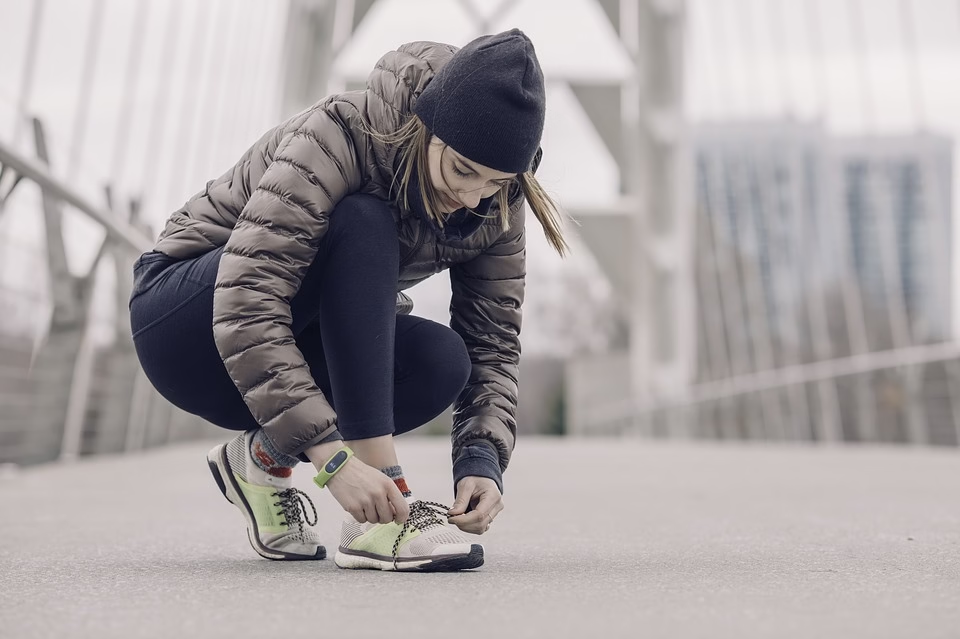
Has the arrival of the frost made you neglect your exercise routine? Dig out those trainers and think again! Instead of hindering your exercise, researchers have found that cold weather can actually improve your workout.
Whether you like running, walking, playing tennis or cycling, exercising outdoors is a fantastic way to improve your health.
Check out the latest research that examines your body’s response to outdoor exercise, then explore our tips on how to enjoy an effective and safe cold weather workout. Read More
Spotting is an important part of strength training. Good technique keeps the training environment safe, allows you to lift harder and helps you progress faster.
Spotting is the practice of providing physical assistance to a lifter during
a strength training exercise. It plays a vital role in enhancing safety, boosting confidence and supporting progression.
Whether you’re lifting the weight yourself or assisting a training partner, it’s important to understand proper technique to prevent injury and maximise the effectiveness of each workout.
Read on to discover the core principles of gym safety, how to execute a lift with a partner, and how to spot others with textbook form.
Lifting Safely: The Ultimate Guide to Spotting Technique
Stepping up to a heavy barbell without a safety net is one of the fastest ways to stall your progress and risk an injury. While building raw strength requires pushing your physical limits, doing it intelligently means mastering the rules of gym safety.
Before you load up your next working set, you need to understand exactly how to use a training partner to safeguard your lifts.
What is a Spotter?
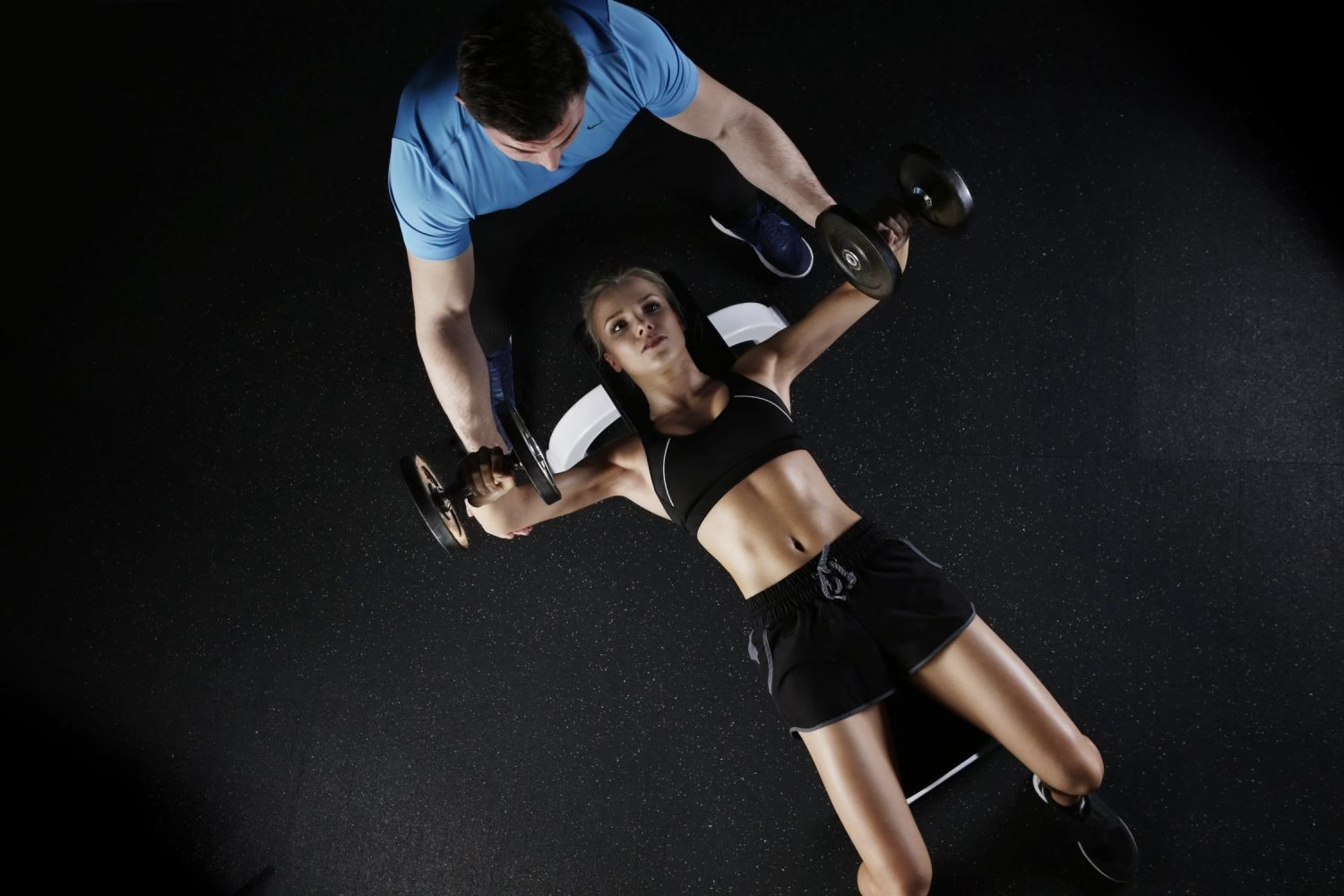
A spotter monitors and supports a lifter through a set, standing ready to guide, lift or stabilise the weight if the lifter hesitates or struggles.
Spotters are especially important in free weight exercises where there’s a risk of dropping the weight or losing control, which is something machines are designed to prevent with their built-in safety catches.
A spotter’s job is simple: protect your body and help you push your limits, stepping in only when absolutely necessary.
A skilled spotter literally has your back, ensuring you never end up pinned under a loaded barbell or compromising your form mid-set.
Spotting requires total psychological focus. Spotters must remain alert and ready to react instantly.
Why Use a Spotter?
Free weights are unbeatable for building strength because they force your body to work harder to balance and stabilise the weight. But that freedom comes with risk. Lose control of the bar, and things can get dangerous fast.
You should always use a spotter when:
• The load passes over your head or body: This includes the bench press, incline press and overhead press.
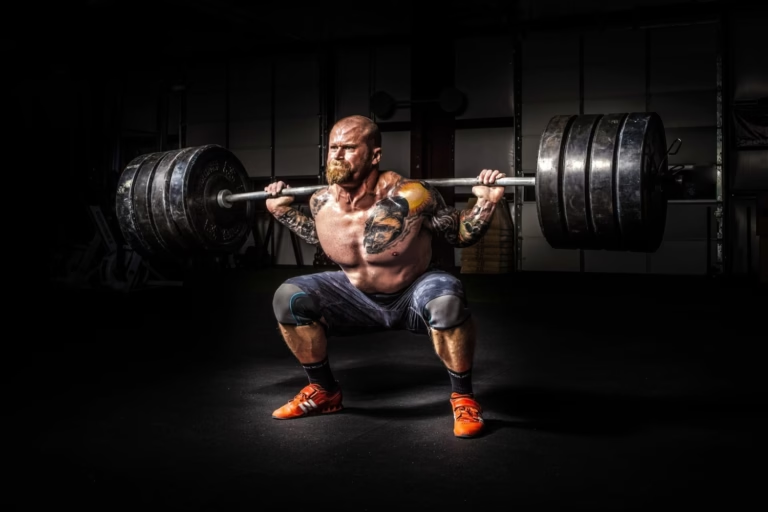
• The bar rests on your body: This includes back squats and front squats where the weight sits on your neck or shoulders.
• You push your limits: This includes testing new personal bests (PRs), executing forced reps or learning complex new movement patterns.
Whenever you’re lifting heavy you’ll usually need a spotter. And always when the weight moves over your head or body. A spotter helps you train with intensity while staying safe, which:
Prevent accidents or injuries if the lifter fails a rep.
Supports the lifter in completing forced reps for strength gains
Helps the lifter maintain proper form under fatigue.
Science Spotlight:
While using a spotter to get those last forced rep in is a popular strategy to drive muscle growth, it needs strict management.
The primary value of a spotter here is to help manage your fatigue, ensuring you can maintain your set volume without compromising spinal alignment or joint integrity.
Lifting Note:
Not every movement requires a spotter. Exercises like deadlifts or Olympic lifts (cleans and snatches) are designed to be safely dropped or ditched if you fail the rep. For these lifts, mastering the art of a safe miss is more important than having a spotter.
Spotting Technique: Barbell Bench Press
The bench press is one of the most common exercises requiring a spotter because you are locked into a flat, horizontal position directly beneath a moving barbell.
The weight passes right over highly vulnerable areas like your face, neck and chest. This means a single mistake or failed rep carries a high risk of injury.
There is a standard safety process for spotting during free-weight exercises and it must be highly disciplined when you’re under the bench.
To keep both the lifter and spotter safe, there is a multi-step communication sequence from the moment your hands touch the bar. To keep both lifter and spotter safe, follow this multi-step communication process:
Set up and positioning:
The spotter stands behind the lifter’s head and grips the bar, using a secure alternating grip (one overhand, one underhand) for maximum leverage and control.
Lift off sequence:
“Deadlift the bar”: The lifter gives the command. The spotter lifts the bar smoothly out of the rack and into the starting position, over the lifter’s chest.
“Bar in”: The lifter calls this out and takes grip on the bar. At this moment both spotter and lifter are holding the bar, confirming the weight is stable.
“My bar”: Once the lifter has a good grip and is ready to take the bar alone, the lifter call this final command. The spotter releases the bar fully into the lifter’s grip, with their eyes on the bar the whole time, keeping their hands tracking inches below it.
During the set:
The spotter keeps close, watching intently, making sure not to disrupt the lifter’s view of the bar. The spotter doesn’t touch the bar unless it slows or stalls, or the lifter calls for help.
Re-racking sequence:
“Spotter in”: After the set is completed, the lifter calls the spotter back in to help with the weight.
“Bar out”: With lifter and spotter both holding the barbell, both guide the bar carefully back over the head of the lifter, towards the rack.
“My bar”: Once the barbell is clear and settled back in the hooks, the spotter calls this final confirmation and the lifter releases the bar.
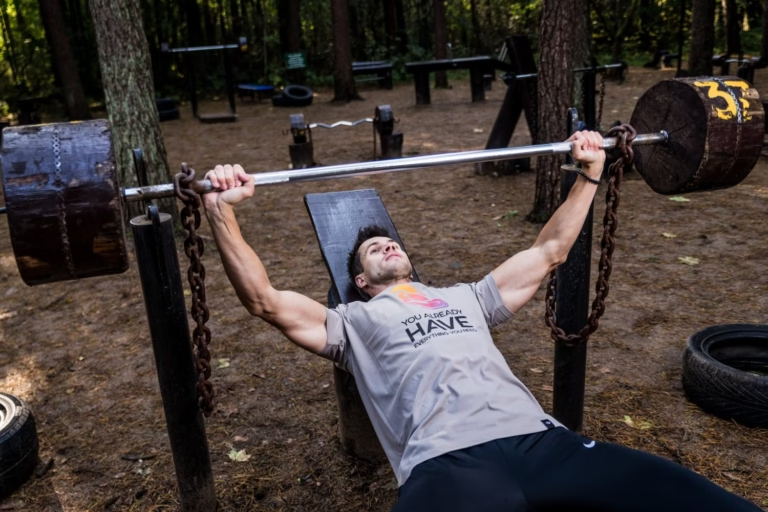
Spotting the Bench Press. Image sourced via Unsplash
Pro Tips for Spotting
• Stay focused: Never look away, get distracted, check your phone or talk to someone else mid-set. A failed rep happens in a fraction of a second. • Agree on a plan: Establish the target rep count, the lift-off cues and exactly how much help the lifter wants before the lift begins. Communication before the lift starts manages expectations from both sides.
• Brace your own body: Maintain a strong stance with your core engaged, especially on heavy lifts, so you’re ready to step in.
• Don’t steal the rep: Only step in when it’s really needed. Let the lifter fight through the sticking point. A good spot is a safety net, not a training partner doing the rows for you.
Other Big Lifts Requiring a Spotter
While the bench press is the most notoriously dangerous lift to perform unassisted, any exercise that places a heavy free-weight load over your body or resting across your shoulders requires a reliable safety net.
As your lifting intensity climbs near your upper limits, managing balance and stabilisation becomes incredibly challenging.
Incorporating standard spotting protocols for your other primary compound movements is an essential step to safeguarding your long-term progress.
Back Squat
For heavy squats, two spotters are ideal. One spotter stands on each end of the barbell, hands tracking under the plates, both ready to lift upwards if the lifter needs help.
Overhead Press
The spotter stands close behind the lifter, hands ready just underneath the bar path, ready to catch the weight cleanly if control is lost overhead.
A great spotter is your final line of defense, but building a resilient body starts long before you step up to the rack. Check out our comprehensive guide on weight lifting injury prevention and safety to protect your joints and keep your training consistent.
Pick Your Progression
Take The Lead: Ready to step up to the bench press or squat rack safely? Learn how to handle barbells and dumbbells with confidence in our comprehensive Free Weights Guide.
Prime the System: Heading over to the heavy lifting zones? Discover how to activate your nervous system and prepare your muscles in our Warming Up Guide.
Recharge the System: Pushing your training partners to failure requires serious physical demand. Discover why prioritising deep sleep and downtime is critical for long-term progress in our Sleep & Recovery Guide.
💬 Over to You!
Spotting isn’t just for show. It’s a critical skill that keeps you pushing safely to your absolute limit, which is exactly where the strength gains happen. Now, we want to hear about your experiences in the gym:
Do you have a go-to communication system or specific lift-off cues when training with a partner?
What are your ultimate gym pet peeves when it comes to getting a bad spot from a stranger?
What is your personal rule of thumb when a stranger asks you to spot their personal best (PR) attempt out of nowhere?
Do you practice an alternative spotting technique that we didn’t break down here?
When training without a partner, do you rely on safety arms and pins, or do you scale back your intensity to avoid failing completely?
To provide the best experiences, we use technologies like cookies to store and/or access device information. Cookies are also used for ad personalisation. Consenting to these technologies will allow us to process data such as browsing behaviour or unique IDs on this site. Not consenting or withdrawing consent, may adversely affect certain features and functions. Google's Privacy & Terms.
Functional
Always active
The technical storage or access is strictly necessary for the legitimate purpose of enabling the use of a specific service explicitly requested by the subscriber or user, or for the sole purpose of carrying out the transmission of a communication over an electronic communications network.
Preferences
The technical storage or access is necessary for the legitimate purpose of storing preferences that are not requested by the subscriber or user.
Statistics
The technical storage or access that is used exclusively for statistical purposes.The technical storage or access that is used exclusively for anonymous statistical purposes. Without a subpoena, voluntary compliance on the part of your Internet Service Provider, or additional records from a third party, information stored or retrieved for this purpose alone cannot usually be used to identify you.
Marketing
The technical storage or access is required to create user profiles to send advertising, or to track the user on a website or across several websites for similar marketing purposes.